
chào + tên / đại từ
Put a name or the correct form of address after chào to greet that person.

Vietnamese Podcast For Beginners · Episode 1
Greetings
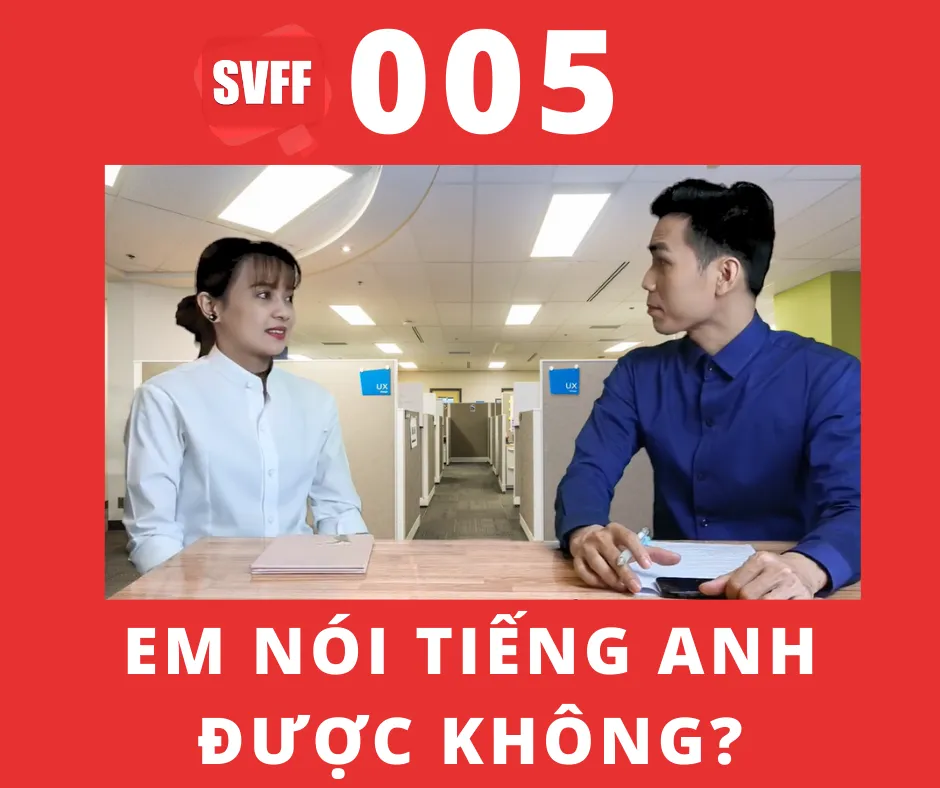
Mr. Nam and Mrs. Hương have known each other for a long time. Hương is a little older than Nam, so Nam calls himself em and addresses her as chị.
Put a name or the correct form of address after chào to greet that person.
Vietnamese forms of I and you change with age, gender and relationship: mình/bạn for the same age; em/anh or em/chị for someone a little older; con with chú, cô, ông or bà for older generations.
Place có before an adjective and không after it to form a yes-no question.
Còn can mean and or on the other hand, and it can turn a question back to the other person.
Nha is a sentence-ending particle that makes the invitation sound friendly.
Auto-generated transcript · Transcript tự động — it may contain mistakes; the audio is the reference.
1. Bài giảng đầy đủ
Welcome to Vietnamese podcast for beginners, created by SVFF, Tiếng Việt giọng miền nam cho người nước ngoài. Podcast number one, greetings, chào hỏi. Hello everybody, my name is Phi and I will be your host today. In this lesson, you will learn how to greet in Vietnamese. Some pronouns such as ông, bà, anh, chị, em. How to use yes no questions with this structure, có không, and also the conjunction còn. Before we start, you will listen to a conversation between two people, Mr. Nam and Mrs. Hương. Those people know each other for a long time. Now, let's listen to a conversation. Okay, now let's learn everything from the conversation. First of all, let's learn how to say hi in Vietnamese. To say hi in Vietnamese, we said chào. Usually, Vietnamese put a pronoun or a name after the word chào to greet the person you're talking to. Chào, John. Chào, Nam. John and Nam are the names. If you want to say hi to Maria, how would you say? Chào, Maria. Chào, Maria. So you know that in Vietnam, it is very important to address someone correctly even on the first time you meet them. So Vietnamese addressing system is not simply you and me. We have many pairs depending on the gender, the age, and the relationship of that person with you. In this lesson, I will introduce some basic pronouns you use when you call someone. So let's start with someone at the same age as you. If you talk to someone at the same age as you, you would call yourself And you would call the person you're talking to In other words, if you are at the same age as the person you're talking to, the word me or I would be And you in this case would be And you in this case would be You might hear some people talk about the word You might hear some people talk about the word TÔI TÔI also means me or I when you talk to someone at the same age as you. But in some accent and in speaking, we rarely use that word. Instead, we use MÂN not TÔI So that's the first pair of pronouns I want to introduce MÂN BÀNG Now let's move to the second pair. If you are talking to a guy a bit older than you, think about your older brother. In this case, you would call yourself MÂN Em chào anh So when you are a bit younger than someone, you are em And when you talk to a guy a bit older than you, like your older brother You call him anh So that's the second pair Now let's move to the third pair What if the person you're talking to are a bit older than you But that person is female Think about your older sister In this case, you also call yourself em Em And you would call that girl Chỉ Chỉ Now if you want to say hi to her, how would you say? Chào chỉ Chào chỉ Or you can also say Em chào chỉ Em chào chỉ So that's the third pair of pronouns I want to introduce Let's move to the next one Now you're talking to a guy a generation older than you A lot older than you Think about a person at a similar age as your dad In this case, you would call yourself Con And you would call him Chú Chú So if you want to say hi to him How would you say? Chào chú Chào chú Con Chào chú Con Chào chú Good Now the next pair You want to talk to a person a generation older than you You can think about a person at the same age as your mother In this case, you also call yourself Con Con And that lady you're talking to You would call her Cô Cô Now if you want to say hi to her How would you say? Chào chú Con Chào chú Con Chào chú Sometimes They also call that lady Dì Dì What's the difference between Cô And Dì Dì Can be a bit older Than your mom Cô Can be a bit younger Than your mom But I think in real life You can stick to Cô Only Because I think girls They like to be addressed Like younger than the age So whenever you think that someone is A generation older than you Call her Cô Let me talk about why this is important In Vietnamese If you address a person Incorrectly on the first place That's gonna be very funny Or sometimes it's gonna be very disrespectful If that person a lot older than you For example If you talk to a lady A generation older than you And you call that person Bạn And yourself Mình They may be angry at you Or that's considered rude Or disrespectful So it is very important To address someone Correctly On the first time you meet them Now let's go to the last two pairs Of pronouns I want to introduce today Now let's say you're talking to An old man Who is two generations older than you Or even more In this case You also call yourself Con Con And you will call him Ông Ông To say hi to this old man How will you say Chào ông Con Con Chào ông Con Now let's move to the last pair of pronouns Now you talk to an old lady A person who is two generations older than you Think about someone who has the same age as your grandmother Or even more Again When someone is a lot older than you You would call yourself Con And in this case You would call this lady Bà Bà Bà Bà Bà To say hi to this old lady How would you say Hi to a person at the same age as you How would you say Hi Mình chào bạn Mình chào bạn Next you wanna say hi Next you wanna say hi To a guy a bit older than you How can you do that Em chào anh Em chào anh Lastly Now you wanna say hi To an old lady Like two generations older than you How would you say hi to her Hi to her Con Chào Bà Con Chào Bà Con Chào Bà There's a bonus question for you Now let's say You are a guy And you are a bit older than a person You want to say hi to that person a bit younger than you How would you say hi to him or her Anh chào em So because you are a bit older than him or her And you are a guy You in this case address yourself Anh and that person becomes em Do you see how it works? So that's all We just learned how to say hi And some common pairs for the pronouns in Vietnamese How to say you and me Depending on the age, the gender And the relationship of the person you are talking to Now let's analyze the conversation with me In the conversation, Nam said Em chào chị Hương Em chào chị Hương So you can understand that Hương In this conversation, it's a bit older than Nam, the speaker So he addressed himself Em And he said hi to Hương Em chào chị Hương Hi Mrs. Hương Em chào chị Hương Nam continues Chị có khỏe không? Chị có khỏe không? Khỏe means healthy Good When we talk about health Có khỏe không? Có Plus an adjective Plus không Is used to form a yes no questions Chị có khỏe không? Are you good? Are you fine? Chị có khỏe không? To make it simple, we translate it to How are you? Chị có khỏe không? Now Hương answer Nam's questions Chào em Chị khỏe Chào em She say hi back Chị khỏe I'm good So to answer Có khỏe không? Question If you want to say yes I'm good You will say Khỏe Or Chị khỏe Or Chị here can be changed Depending on the person you're talking to But if you want to say no to this question You will answer like this Không khỏe Không khỏe Khương continues Còn em Còn em Còn em Còn Is a conjunction Similar to And Or On the other hand Còn em How about you? Nam said Em khỏe Em cảm ơn chị Em khỏe Em cảm ơn chị Hương continues Chào em So why she say hi again in this case? Well actually chào can be used both as a hello and also a goodbye Chào em Bye Hương continues Nói chuyện sao nha? Nói chuyện To talk Sao Later Nói chuyện sao Talk later There's a word nha at the end This is an ending particle This is you to sound friendly Nói chuyện sao nha Nam continues Em chào chị Goodbye And he also says Hẹn gặp lại Hẹn gặp lại See you later So that's all for the conversation Now let's listen to the conversation one more time Good Dạ Em chào chị Hương Chị có khỏe không chị? Chào em Chị khỏe Còn em? Dạ Em khỏe Em cảm ơn chị Chào em Nói chuyện sao nha Dạ Em chào chị Hẹn gặp lại Good Now let's move to the practice part There are 4 sentences You would translate these sentences from English to Vietnamese Sentence number 1 Now you're talking to a girl a bit older than you and you wanna ask her how are you? How would you ask her in Vietnamese? Chị có khỏe không? 2 Now you are that girl and you answer to the question thank you, I'm fine. How would you answer that? 3 Cảm ơn chị khỏe Sentence 3 Now you say goodbye to a guy who's a bit older than you and you also say see you later. How would you say that in Vietnamese? Chào anh hẹn gặp lại Number 4 How would you say talk later in Vietnamese? Nói chuyển sao nhé? Next, let's move to some vocabularies. You will listen to a list of vocabularies that you need to review and remember from this podcast. Vocabulary Healthy Khỏe And Con To talk Nói chuyển Nói chuyển Hello Chào To talk later Nói chuyển sao Nói chuyển sao See you next time Hẹn gặp lại Hẹn gặp lại Hẹn gặp lại Thank you Cảm ơn Cảm ơn So this is the end of the podcast. In this lesson, we have learned how to greet, how to say hi, how to say how are you, and some basic pronouns in Vietnamese. Also, we have learned how to ask yes no questions by using có, không, and the conjunction con. I hope that you find this useful. You can take a look and download the PDF audio of full lessons, just vocabulary, just download. If you want to practice more, we have created the crossword for learners to review the vocabulary. And to have some feedback for us, feel free to send us your suggestions. We appreciate that. And this is the end of podcast number one. I will see you in podcast number two. Chào bạn!
A transcript is not available for this track.
3. Thực hành
sentence number one now you're talking to a girl a bit older than you and you want to ask her how are you how would you ask her in vietnamese two now you are that girl and you answer to the question thank you i'm fine how would you answer that sentence three now you say goodbye to a guy who's a bit older than you and you also say see you later how would you say that in vietnamese number four how to say talk later in vietnamese how would you say that in vietnamese you
4. Từ vựng
Healthy. Khoẻ. And. Con. To talk. Nói chuyện. Nói chuyện. Hello. Chào. To talk later. Nói chuyện sau. Nói chuyện sau. See you next time. Hẹn gặp lại. Hẹn gặp lại. Thank you. Cảm ơn. Cảm ơn. Cảm ơn. Thank you.
Nghe xong tập rồi làm bài nha — điểm chấm theo từng kỹ năng nghe, không chỉ một con số.
Your rating helps us make the next episodes better.