To be able to stay in Vietnam, a complete beginner needs to reach level 3.
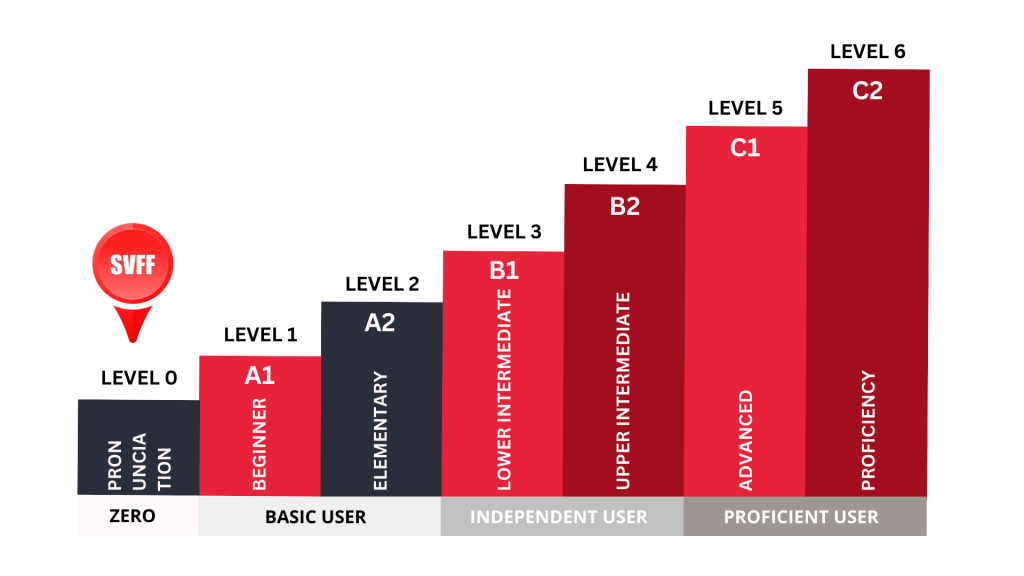
If you are a complete beginner you should start learning Vietnamese pronunciation, After this course, you will be able to pronounce any Vietnamese word correctly even without understanding the meaning of it. This course will last from 4 to 8 hours depending on each student. And of course, this is just in the Southern Vietnamese dialect.
What you’ll learn
- Be able to distinguish the tones
- Build the foundation for your next step in learning Vietnamese
- Understand how to form some specific complicated sound
Who this level is for:
- Learners who want to improve their pronunciation
- Complete beginners
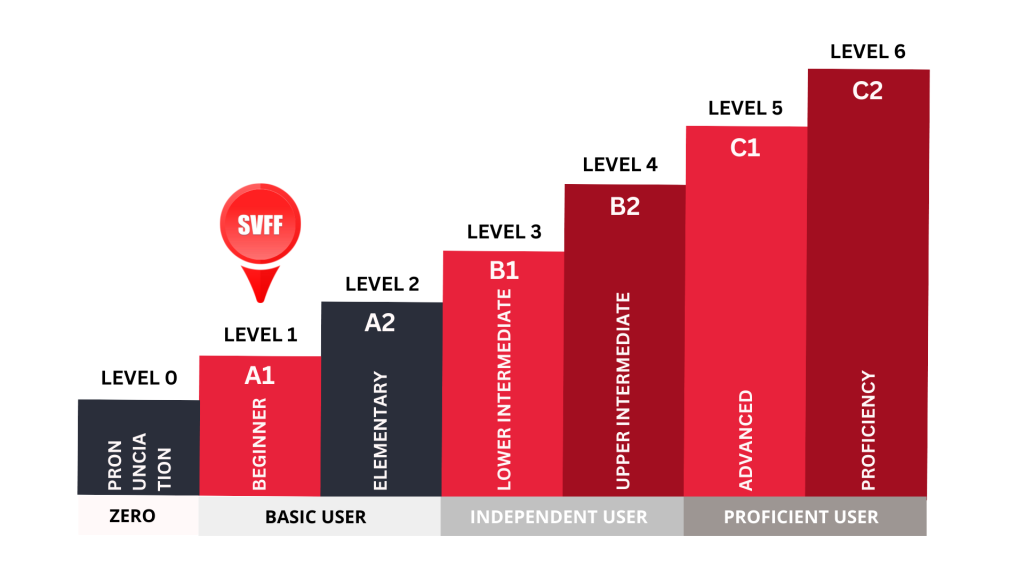
At this level, learners get the opportunity to practice simple topics, including greetings, asking about time, age, and directions, ordering food, and sharing personal information. The Vietnamese for beginners at level A1 typically spans 24 to 48 hours, depending on the students' pace.
What you’ll learn
- Understand and use familiar everyday expressions and very basic phrases
- Be able to introduce yourself and others, ask and answer questions
Topics will be covered in this course:
- greetings, nationality, occupation, address, time, date, giving direction, means of transportation, family, ordering food
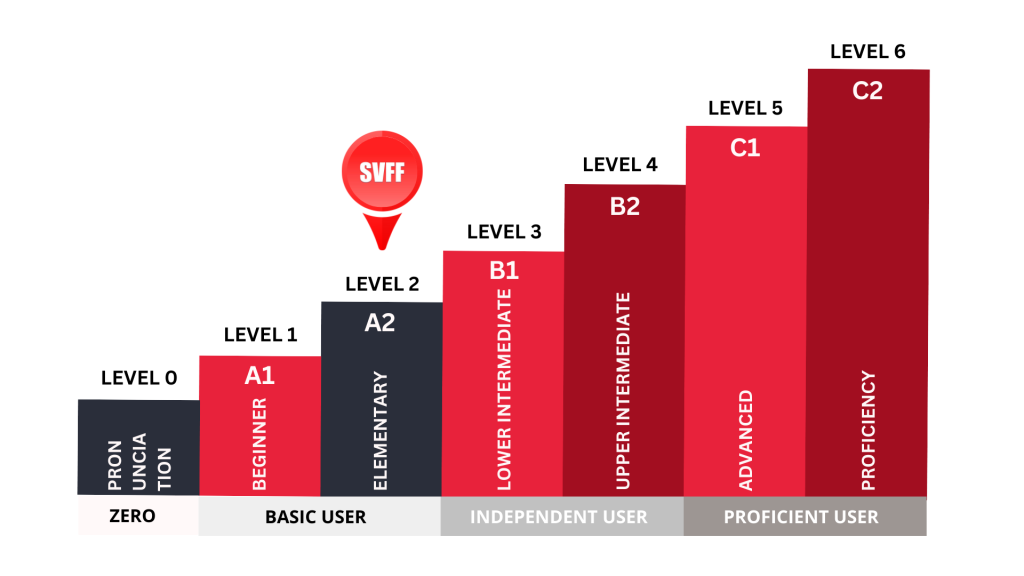
Even though it's still for beginners, the material will be a bit more challenging. After completing Vietnamese for Beginners level A2, you'll be able to form longer sentences and engage in conversations about familiar topics.
What you’ll learn
- Understand and use sentences and frequently used expressions
- Be able to communicate in simple and routine tasks, to describe in simple terms
Topics will be covered in this course:
- shopping, feelings, talking on the phone, vacations, hotels, renting a house, hobby, likes and dislikes, talking about work, describing a person
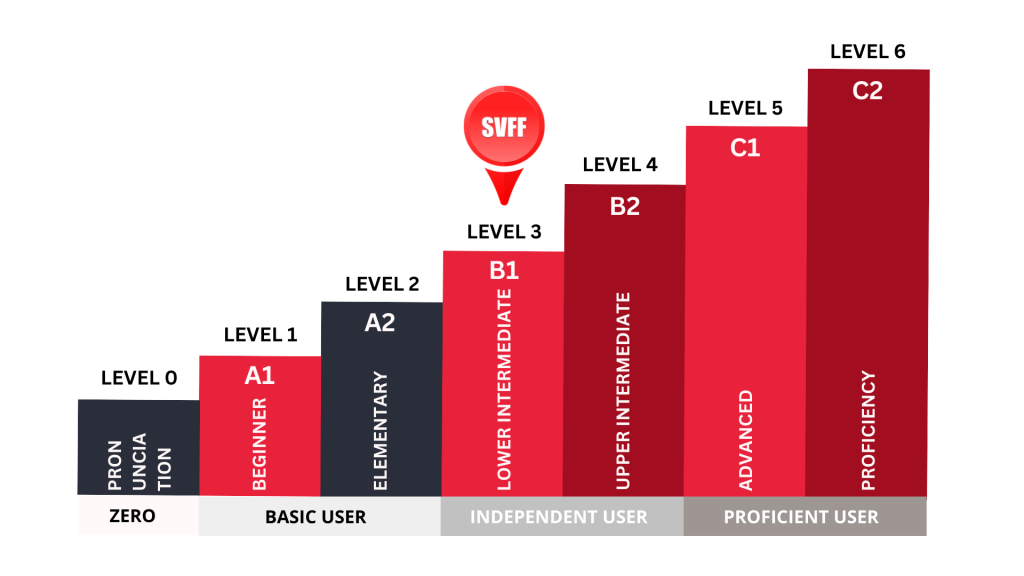
At Level 3, which is the initial stage of intermediate learning, studying Vietnamese becomes more engaging as you are able to express yourself more freely in the language. However, it is essential to continue expanding your knowledge and vocabulary across various topics, as well as learning to navigate more complex situations.
What you’ll learn
- Understand the main points of clear standard input on familiar matters such as work, school, leisure, etc
- Be able to deal with most situations likely to arise, to produce simple connected text on familiar topics such as personal interest, describe experiences and events, dreams, hopes, and ambitions
Topics will be covered in this course:
- describing a person, health, education, money, clothes, accommodation, family values, vacation
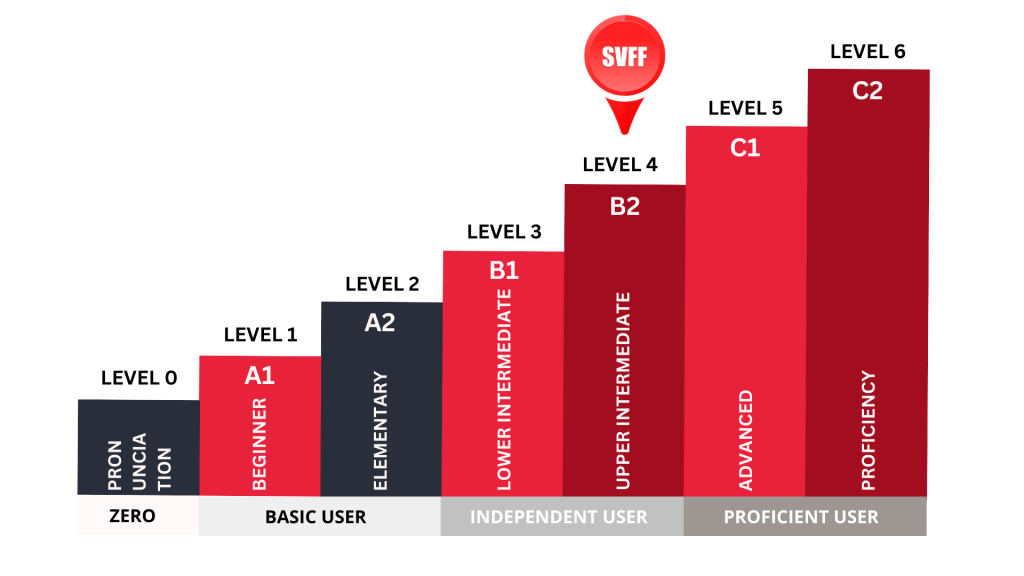
The roles of teachers at levels 3 and 4 are quite similar; however, once you complete this level, you are expected to speak more quickly and have a better understanding. Vietnamese tutors may speak at a faster pace, so it's important for you to adjust to this speed in order to avoid feeling surprised when conversing with other native Vietnamese speakers.
What you’ll learn
- Understand the main ideas of complex text on both concrete and abstract topics
- Be able to interact with a degree of fluency
- Produce clear, detailed text on a wide range of subjects
Topics will be covered in this course
- in the past, my plans, me at work, traffic in Vietnam, countryside and cities, my free time, sports, Vietnamese culture
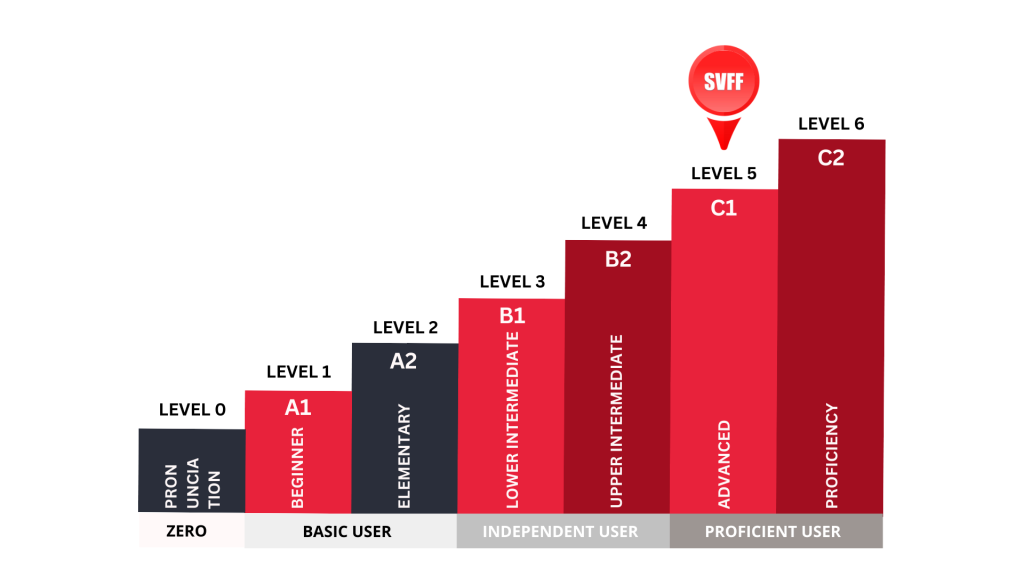
If your main goal is to communicate in Vietnamese, once you reach level four, it's time to stop studying and start making friends with native Vietnamese speakers. You should also immerse yourself in Vietnamese environments by watching movies, news, and more.
What you’ll learn
- Understand a wide range of more demanding, longer texts, and recognize implicit meaning in them
- Be able to express yourself spontaneously, very fluently and precisely
- Use language flexibly and effectively for social, academic, and professional purposes
- Produce clear, well-structured, detailed text on complex subjects
- Understand with ease practically everything you hear or read
- Summarise information and arguments from different spoken and written sources
Topics will be covered in this course
- weather, love and marriage, inventions, complaints and apologies, modern lifestyle, generation gap, values in life, embarrassing moments

0 Comments
Log in to leave a comment.