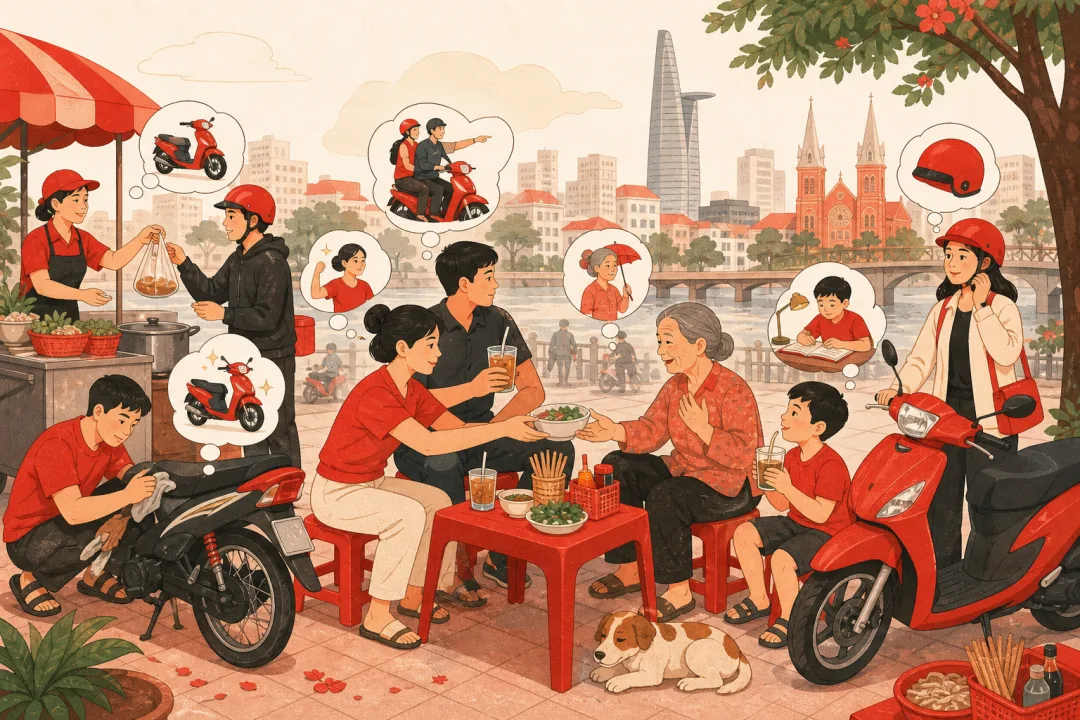
Vietnamese does not have a separate grammatical category called "modal verbs" the way English does. What it has is a tidy little family of helper verbs that sit in front of the main verb and do exactly the work that English modals do — express ability, possibility, obligation, permission, intention, and desire. The best news for you as a learner: there is no conjugation, no tense agreement, no awkward word order to memorise. You just slot the helper in front of the verb.
The pattern is always the same: