Browse Grammar Essentials
Chapter 2

Causative Verbs — Asking, Telling, Letting

Động từ sai khiến — nhờ, bảo, mời, yêu cầu, cho

Vietnamese has no single "have/make/let someone do something" pattern. Instead, you pick a verb that already carries the social register: nhờ for favors, bảo for neutral instruction, mời for polite invitations, yêu cầu for formal requests, cho for granting permission, and bắt for forcing. The grammar is identical (causer + verb + causee + main verb), but choosing the wrong verb is the single biggest politeness mistake learners make. This guide walks you through the ladder, when each fits family vs. work vs. strangers, and the Southern conversational habits around them.

Level focus: A2-B1 Southern-first 182 views

English collapses a whole social spectrum into three verbs — have, make, let. "I had my brother fix the bike. I made him apologize. I let him borrow the car." Vietnamese refuses to be that flat. Instead of one verb that you soften with tone, Vietnamese gives you a ladder of causative verbs, and the one you pick is itself the politeness signal.

Get the verb right and you sound natural. Pick the wrong rung and even a perfect sentence sounds rude, cold, or strangely formal.

Subscribe to read the full guide

You're reading the intro. Subscribers get the complete chapter-style guide — every section, example, and the teacher notes — plus the full curated library of grammar patterns with native audio, word-by-word gloss, and common-mistake callouts.

  • The full guide, top to bottom
  • Every curated grammar pattern
  • Native audio & word-by-word gloss
  • Common-mistake callouts & usage notes

Pay with SVFF Credit · Cancel anytime · Gift access is available when SVFF Team grants it · Learn more

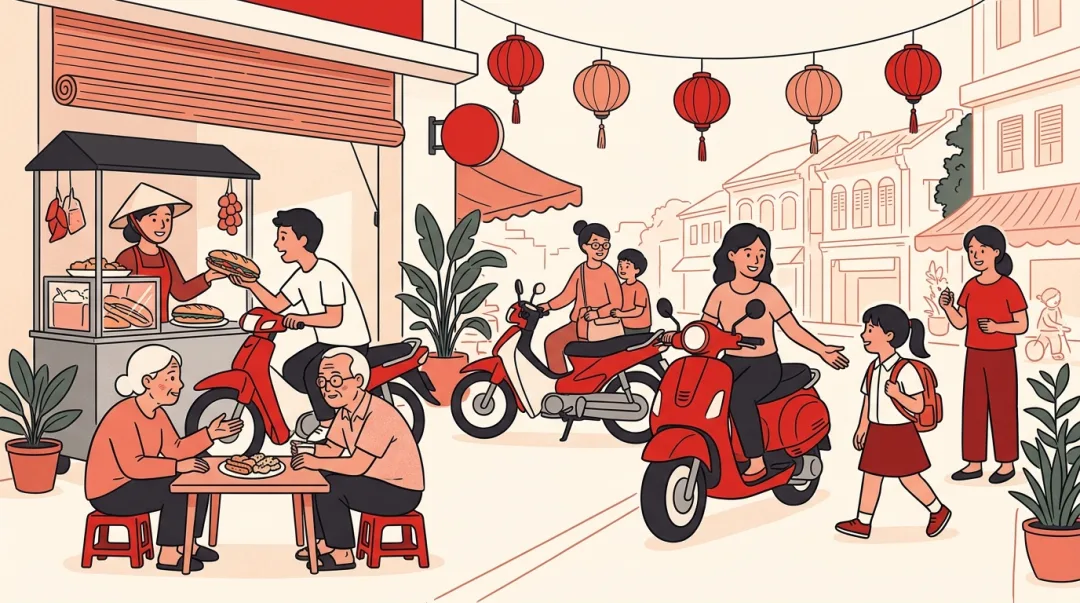
Illustration
Illustration for the Vietnamese grammar pattern Causative Verbs — Asking, Telling, Letting