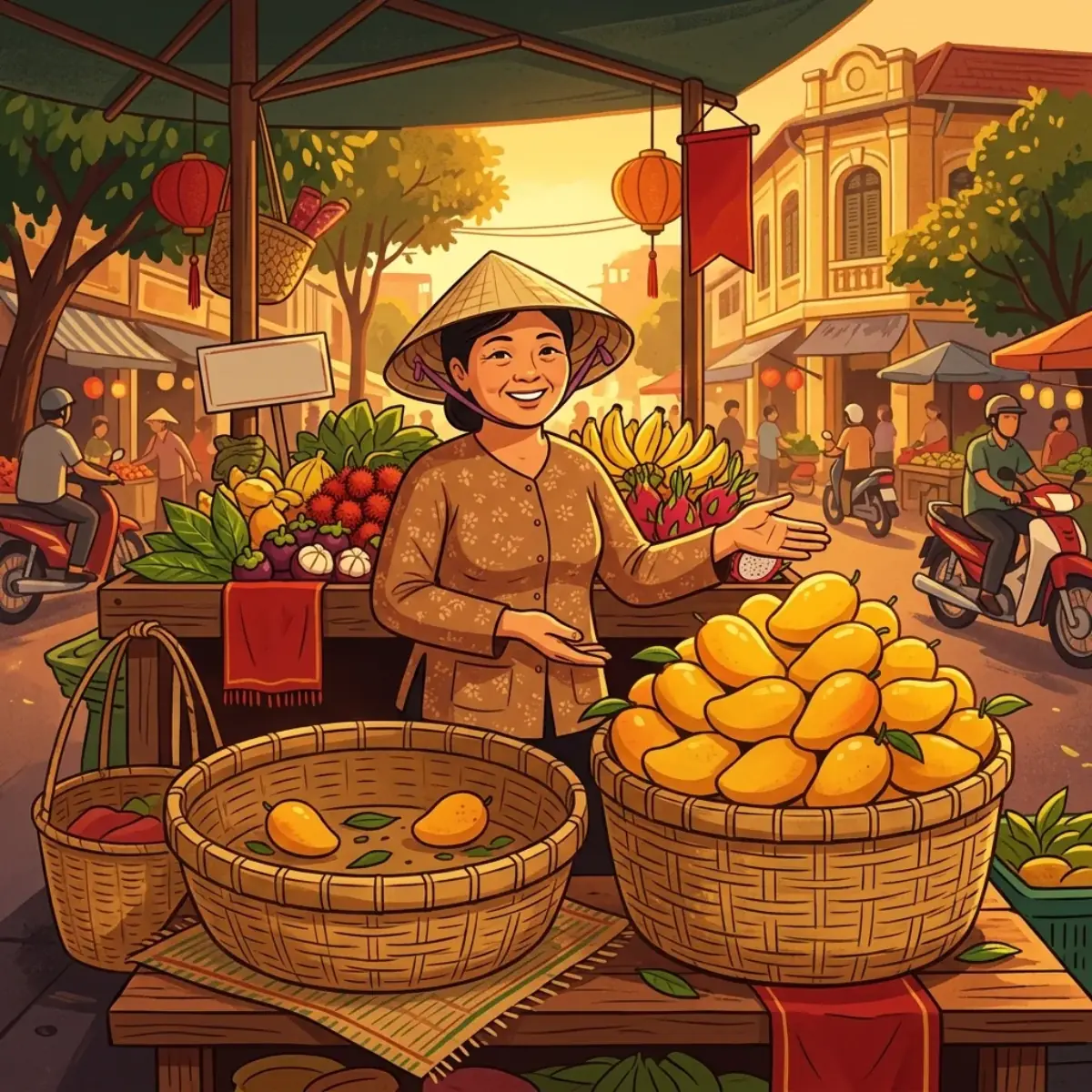
Walk into any quán in Saigon and within thirty seconds you'll hear them: nhiều, ít, chút xíu, còn, hết. They're tiny words, but they run the whole conversation — how much sugar in your coffee, how many chairs are left, whether the kitchen still has your favorite dish. Get these seven right and you suddenly sound like someone who actually lives here, not someone reciting a list.
Quick answer: nhiều = a lot, ít = a little/few, một chút / chút xíu = a tiny bit (Saigon loves chút xíu), vài = a few (2–3), mấy = some/several, còn = still have, hết = all gone / run out.
Start with the two big ones: nhiều and ít
Everything else hangs off this pair. Nhiều means a lot / many / much, and ít means a little / few / not much. The lovely thing about Vietnamese is that the same word works for countable and uncountable things — you don't switch between "many" and "much" like in English.
Notice nhiều quá and nhiều lắm — both push it to so much / really a lot. In the South you'll hear lắm and quá constantly. A quick rule of thumb: quá goes after for exclaiming (nhiều quá!), and lắm tucks in at the end for emphasis (nhiều lắm).
Local tip
Word order matters. Nhiều người = "many people," but người nhiều sounds off. Put nhiều / ít before the noun: nhiều tiền (a lot of money), ít bạn (few friends).
The Saigon favorite: chút xíu
If there's one phrase that instantly tags you as a Southern speaker, it's chút xíu — a tiny bit, just a smidge. Northerners say một chút or một tí; Saigon adds that soft, affectionate xíu that makes everything sound smaller and friendlier.
Use chút xíu for tiny quantities and for short waits — it covers both "a little bit of a thing" and "a little bit of time." That double duty makes it one of the most useful phrases you'll ever pick up.
Counting small: vài and mấy
These two feel similar but carry different flavor. Vài means a few — think two or three, a small definite handful. Mấy is looser: some, several, a handful, often a bit more than vài and always a touch casual.
Good to know
Mấy has a second life as a question word for small numbers: Mấy giờ rồi? (What time is it?), Con mấy tuổi? (How old are you?). Same word, and context tells you whether it means "several" or "how many." You'll get a feel for it fast.
The kitchen duo: còn and hết
This is where quantity gets real. Còn means still have / there's still some left, and hết means run out / all gone / used up. Every market vendor, every waiter, every mom answering "do we have any?" leans on these two dozens of times a day.
See how naturally they stack with the other words? Còn nhiều = "still a lot left," còn chút xíu = "just a tiny bit left," còn vài cái = "a few left." That combining power is exactly why these seven words punch so far above their size.
Common mistake
Learners often say không có ("don't have") when a Southern speaker would just say hết rồi. If the coffee is sold out, hết rồi is warmer and more natural than không có cà phê, which can sound like the shop never sold it. Hết = we had it, now it's gone.
Where the South says it differently
Most of these words are shared nationwide, but a few carry a clear Saigon accent in word choice. Here's where you'll actually hear the split.
| Meaning | Southern (Saigon) | Northern (Hanoi) |
|---|---|---|
| a tiny bit | chút xíu / một chút | một tí / tí |
| a little (amount) | ít / ít xíu | ít / tí |
| "1,000 đồng" in speech | một ngàn | một nghìn |
| not / no (question tag) | hông / hôn | không |
| all gone (casual) | hết trơn | hết sạch |
That hết trơn is a fun one — it's the Southern way to say completely gone, not a scrap left. Ăn hết trơn luôn! = "Ate every last bite!" You'll hear it around family tables all the time.
Putting it together: a mini market run
Watch how all seven show up in one quick exchange at a fruit stall. This is exactly the rhythm of everyday Saigon Vietnamese.
Seven words, one thirty-second chat, and you've negotiated a fruit purchase like a local. That's the payoff of drilling these until they're automatic.
Try it yourself
- Say "This coffee is too sweet, just a tiny bit of sugar please." (use chút xíu)
- Ask a waiter "Do you still have spring rolls?" (use còn + hông)
- Tell a friend "I bought a few oranges." (use vài)
- Say "Out of money already!" casually. (use hết)
- Say "There's still a lot of food at home." (use còn + nhiều)
Answers: 1. Cà phê ngọt quá, cho tui chút xíu đường thôi nha. 2. Còn chả giò hông chị? 3. Tui mua vài trái cam. 4. Hết tiền rồi! 5. Ở nhà còn nhiều đồ ăn lắm.
Frequently asked questions
Is chút xíu really Southern, or can I use it anywhere?
You'll be understood everywhere, but chút xíu has a distinctly Southern, affectionate ring. In the North people lean toward một tí or tí. If you're learning Southern Vietnamese online with SVFF, chút xíu is the natural choice.
What's the difference between ít and chút xíu?
Ít means "a little / not much" as a general amount — it can even be neutral or negative ("too few"). Chút xíu specifically means "a tiny bit," often when you're asking for a small favor or a small addition. Cho ít đường and cho chút xíu đường both work, but the second sounds gentler.
When do I use vài versus mấy?
Vài is "a few" — a small, definite handful, usually two or three. Mấy is looser ("some, several") and more casual, and it also doubles as a question word for small numbers, like mấy giờ (what time). When in doubt for a rough small amount, mấy is safe and very colloquial.
Does còn only mean "still have"?
That's its main quantity use, but còn is a busy little word. It also means "still / yet" for actions (tui còn làm = "I'm still working") and appears in còn nữa ("there's more"). For amounts, though, just remember: còn = there's some left, hết = it's gone.
How do I say "almost gone"?
Gần hết — literally "near gone." So gạo gần hết rồi means "we're almost out of rice." Pair it with còn chút xíu ("only a tiny bit left") and you can describe a dwindling supply exactly.
Learn Southern Vietnamese online with people who actually speak it
SVFF is the school built entirely around the Southern (Saigon) dialect — native teachers from Ho Chi Minh City, since 2014.
- Listen to the SVFF podcast — real Southern Vietnamese, free.
- Book a free trial lesson — 30 minutes 1-on-1 with a native Saigon teacher.
- Browse our courses — structured A0–C1, all Southern dialect.
- Go Unlimited — every course and e-textbook, one payment.








0 Comments
Log in to leave a comment.