Tiếng Việt Của Con — Southern Vietnamese for Kids by SVFF
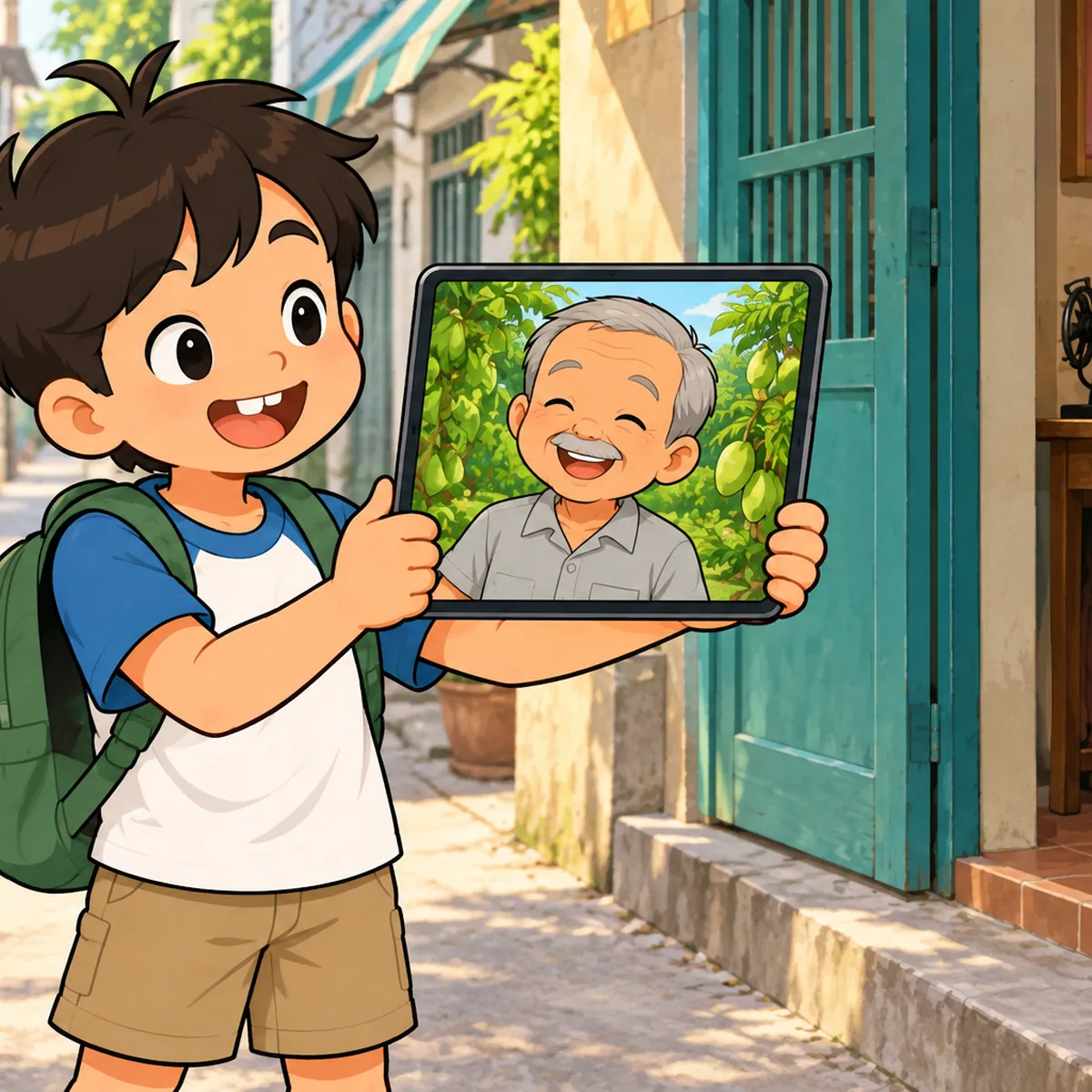
We all want our children to connect with their grandparents, but a Sunday video call often turns into awkward silence if the child only speaks English. Giving your child specific Vietnamese phrases for kids to talk to grandparents can bridge that gap. Since early exposure to family language builds a foundation for connection, teaching them just a few Southern Vietnamese sentences—like a confident Con chào ông bà—can turn a quiet wave into a meaningful conversation.
Prepare a greeting
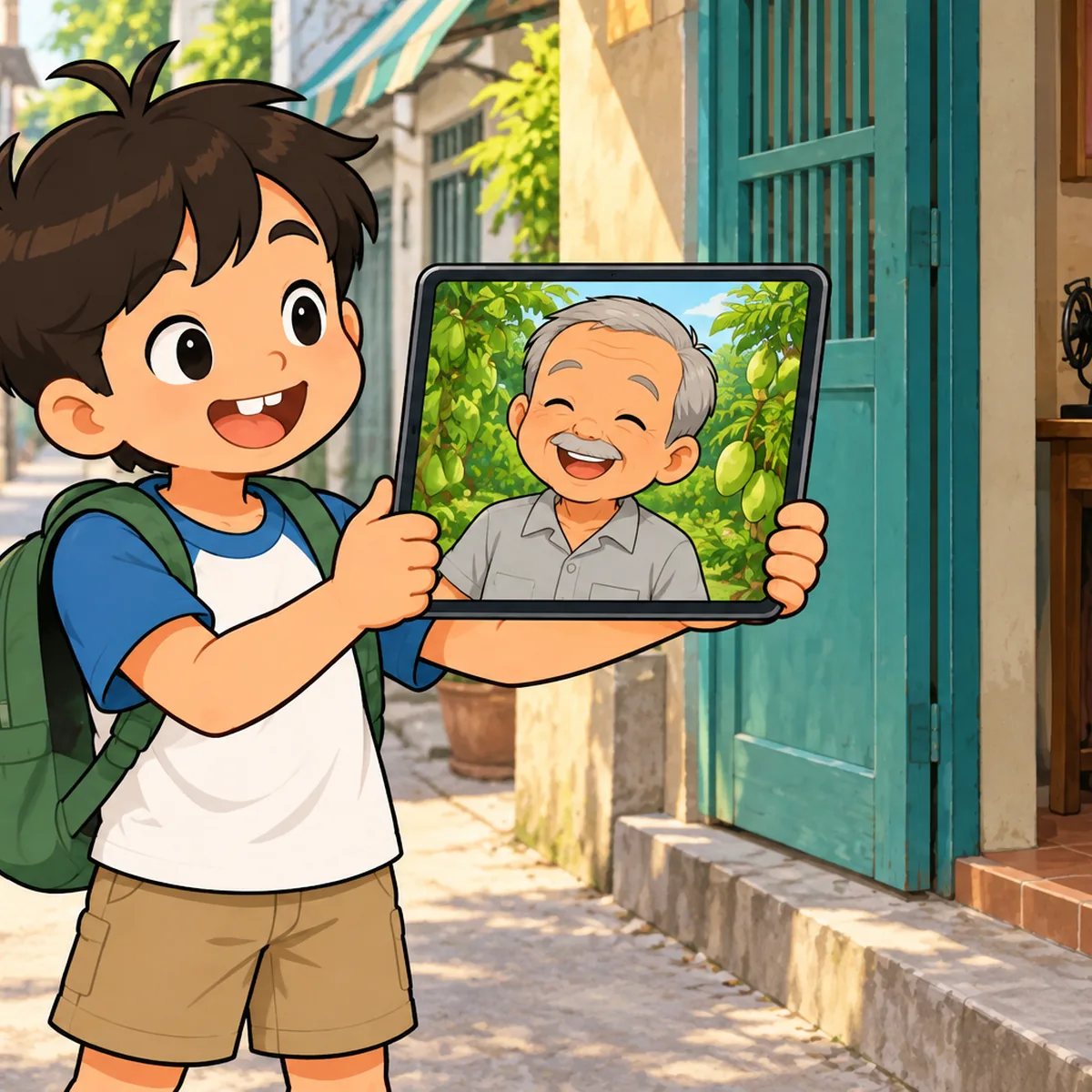
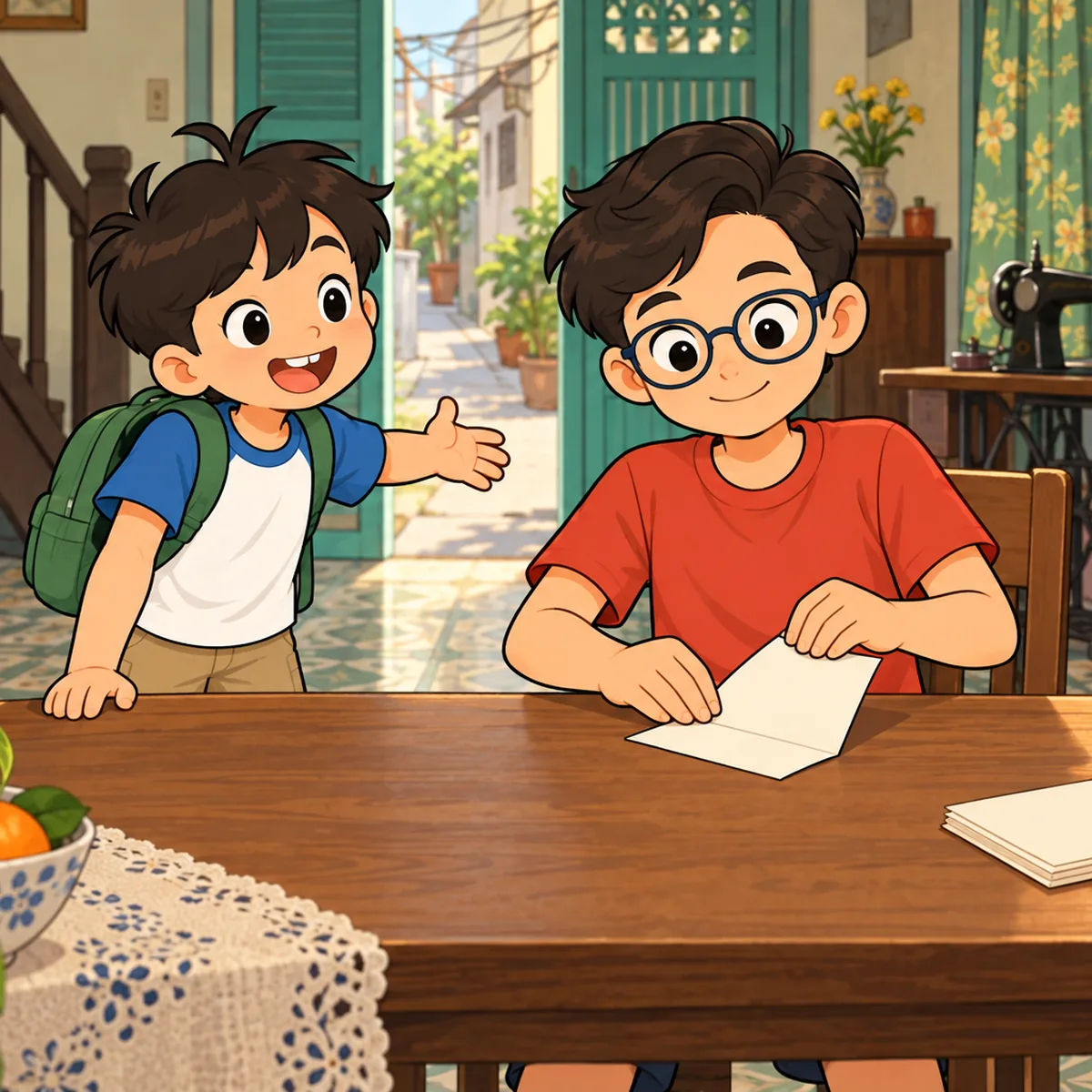
Before the call, practice a greeting the grandparent actually uses: ‘Dạ, con chào bà ngoại!’ or ‘Con chào ông nội!’ Say the relative's preferred name, not a label guessed from a generic worksheet. Keep the sentence on a small card beside the device if your child wants help. At the start of the call, let the child wave and read from the card. A warm greeting counts even when the rest of the call moves between Vietnamese and English.
Ask a real question
Give your child one genuine question: ‘Bà khỏe hông?’ (How are you?) or ‘Ông ăn cơm chưa?’ (Have you eaten?). Ask the grandparent beforehand to answer slowly and briefly. Then help the child reply with ‘Dạ’ or ‘Con cũng khỏe.’ Avoid asking a child to recite five unrelated sentences at once. A question that invites a real answer turns the call into a relationship, and the same question can become a comfortable weekly ritual.
Show and name one object
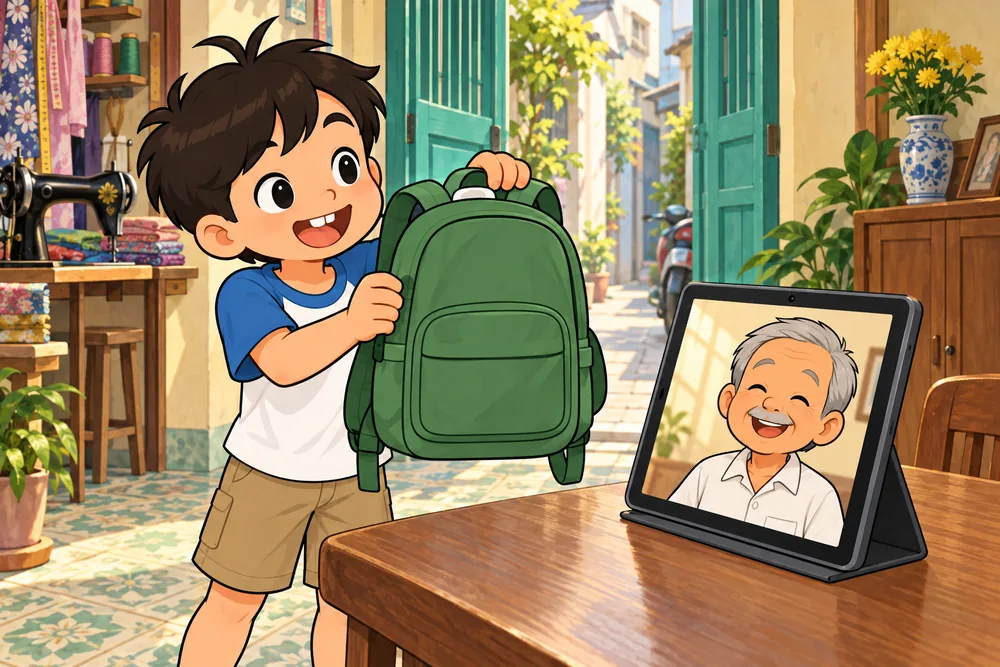
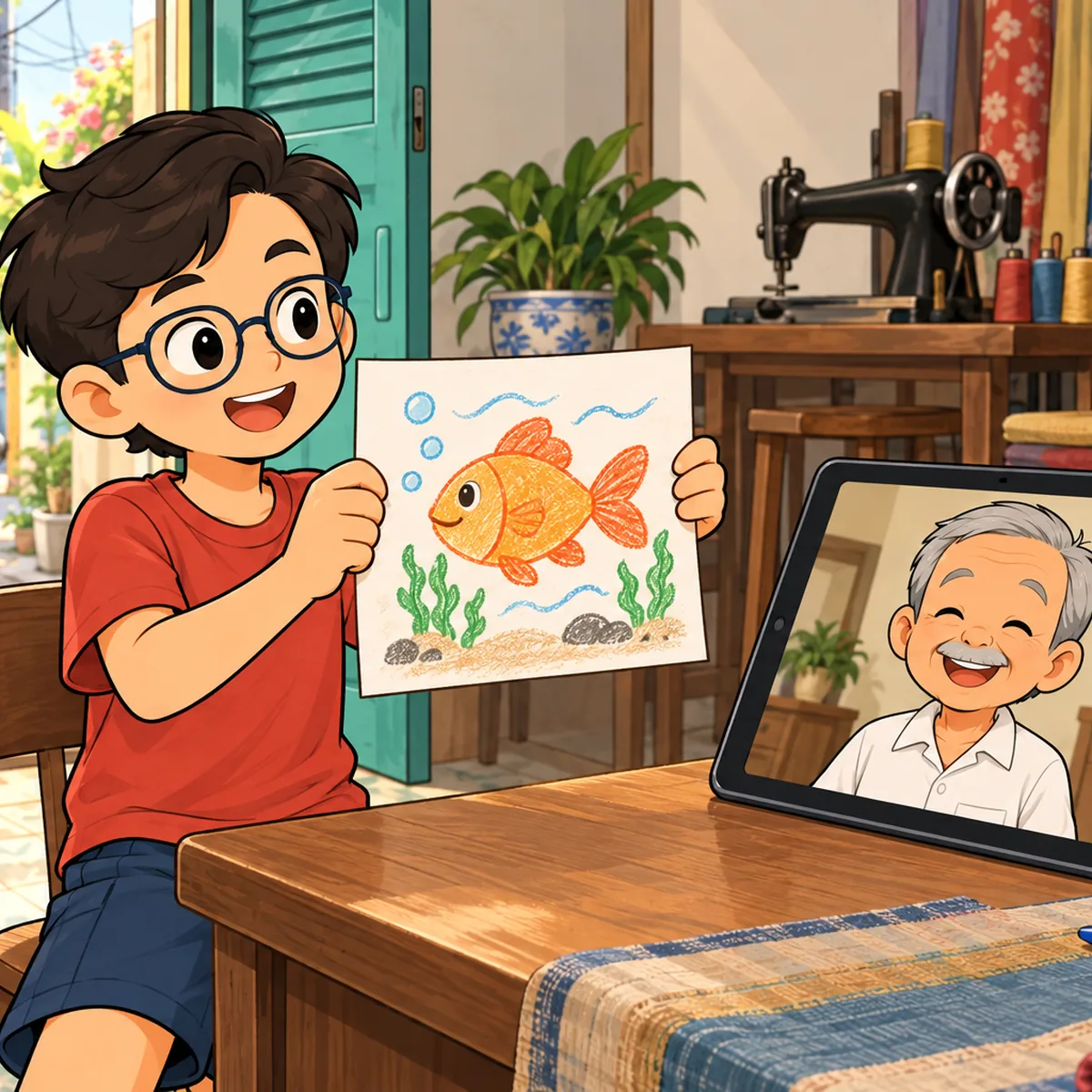
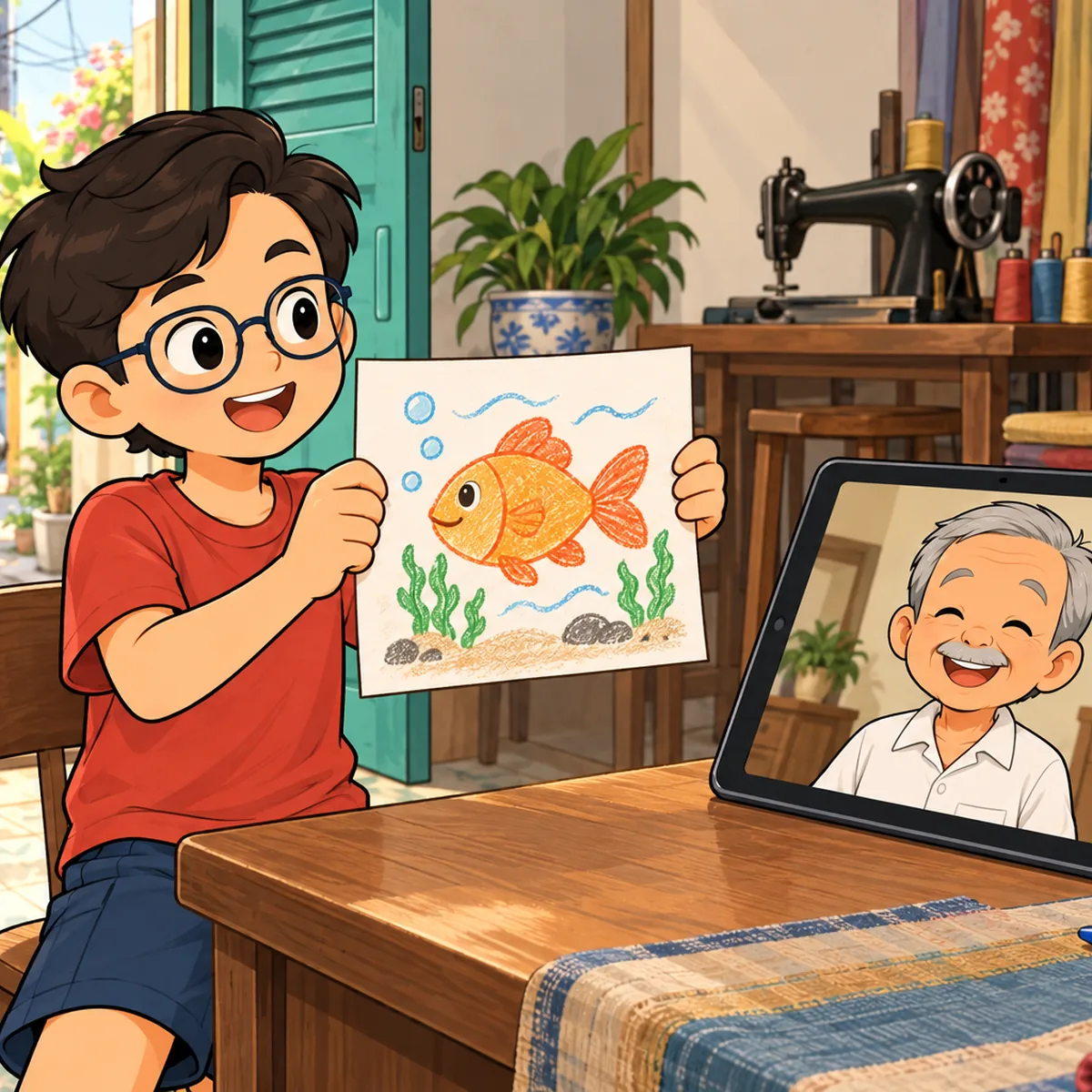
Have one familiar object ready: a drawing, a school bag, or a toy. The child can hold it to the camera and say, ‘Bà ơi, con vẽ con mèo!’ If the word is new, a parent can model it once and let the child say just mèo. Grandparents can ask, ‘Mèo màu gì?’ and accept a color, a point, or a smile. Showing something concrete gives everyone a shared topic when the screen feels awkward.
Let grandparents ask back
Invite Ông or Bà to ask one question the child can answer: ‘Hôm nay con ăn gì?’ or ‘Con có đi học hông?’ Tell the grandparent what the child has practiced so the question fits. If the child answers in English, translate one useful word and keep the conversation moving. Give plenty of pause time; audio delay makes quick prompting feel like interruption. The grandparent's interest is more valuable than correcting every sound.
End the call warmly
End with a phrase that can be repeated every call: ‘Con thương bà. Con chào bà nha!’ If that feels too much, ‘Dạ, chào bà!’ is enough. Let the child press the goodbye button after the grandparent replies. Later, ask which phrase they liked and use it during the week. A call of just a few minutes can still build a real pattern of greeting, sharing, asking, and saying goodbye in the family's Vietnamese.
Are you ready to support your child's journey? Explore our Tiếng Việt Của Con series today and give them the gift of the family language.
Book a free trial for my child
Frequently asked questions
What should a child say first on a video call?
Before the call, practice a greeting the grandparent actually uses: ‘Dạ, con chào bà ngoại!’ or ‘Con chào ông nội!’ Say the relative's preferred name, not a label guessed from a generic worksheet. Keep the sentence on a small card beside the device if your child wants help.
What if my child freezes during the call?
Have one familiar object ready: a drawing, a school bag, or a toy. The child can hold it to the camera and say, ‘Bà ơi, con vẽ con mèo!’ If the word is new, a parent can model it once and let the child say just mèo.


0 Comments
Log in to leave a comment.