Tiếng Việt Của Con — Southern Vietnamese for Kids by SVFF
Celebrating Tết for kids in the US, Australia, or Canada is a beautiful way to share heritage, but it's also the perfect moment for language learning. When relatives gather and hand out lì xì (red envelopes), the motivation to speak is naturally high. Building on the finding that early language exposure increases vocabulary, using Southern Vietnamese during Lunar New Year activities gives children a joyful, memorable context for their family's words.
A child-sized greeting
Choose one greeting before Tết begins: ‘Con chúc ông bà năm mới vui khỏe!’ A younger child can say just ‘Dạ, con chúc Tết ông bà.’ Practice with a picture of the relative so the words have a person attached. Explain that different families phrase wishes differently; ask grandparents which expression feels natural to them. On the day, invite the child to greet one person at a time and accept a wave or a quiet ‘Dạ’ when a crowded room is overwhelming.
A food and family picture game
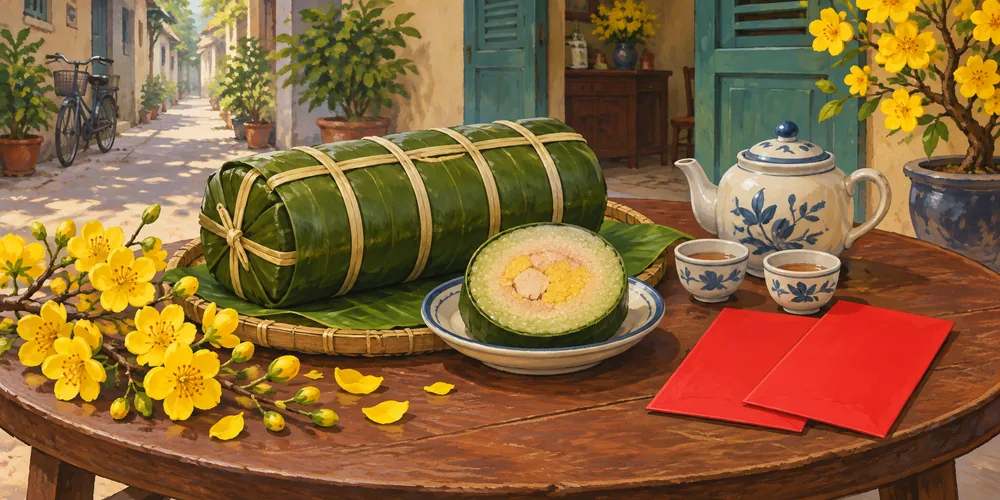
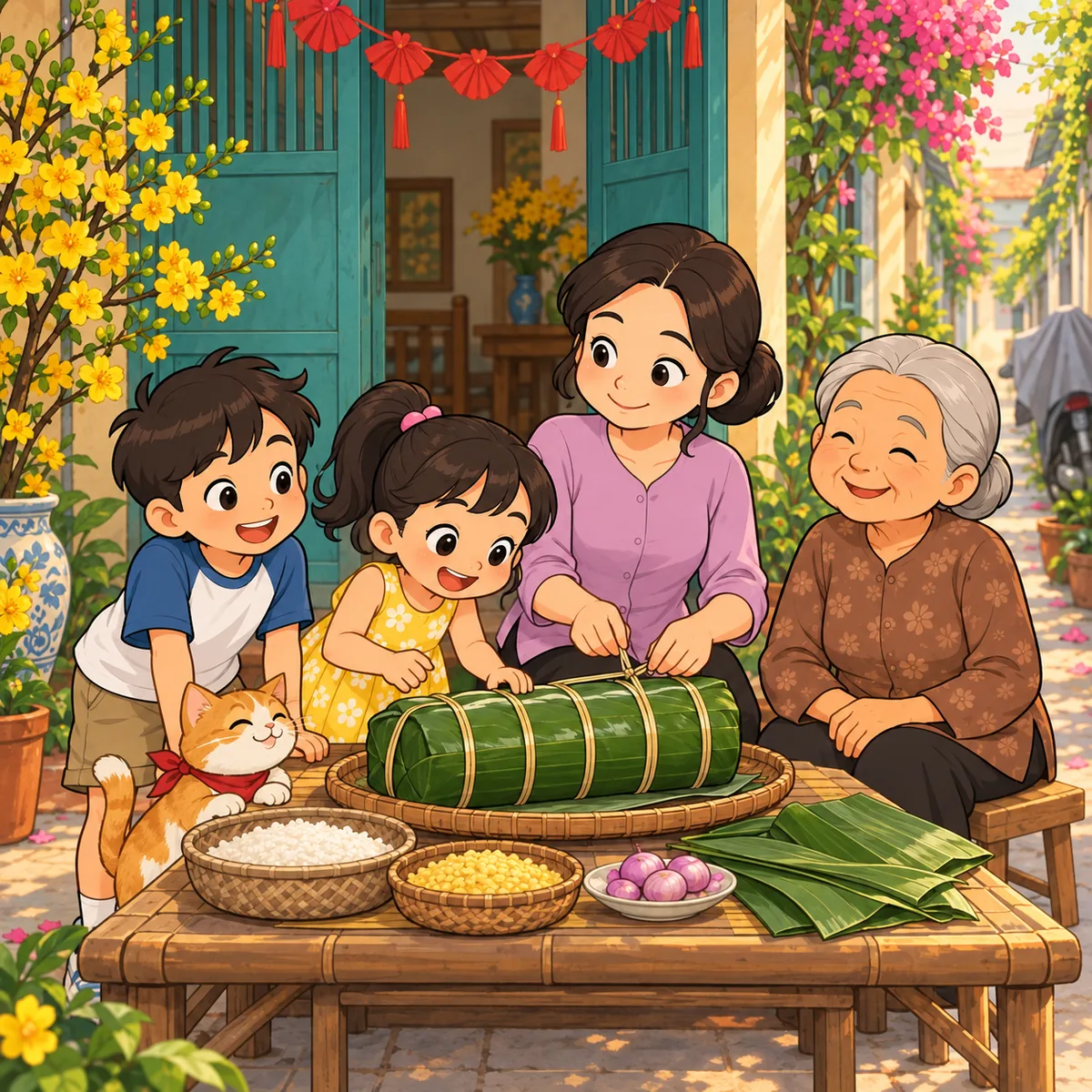
Put three family pictures beside a few foods you actually serve. Ask, ‘Ai làm bánh?’ or ‘Má thích món nào?’ Name the food in Southern Vietnamese, then let the child match it to the person who cooks or shares it. If your family does not make bánh tét, use the dish on your own table instead. Food words become easier to remember when the child can smell, see, or help serve the real thing. Keep hot stoves and knives with adults.
One short story or song
Read one short family story or sing a brief song about visiting relatives, welcoming the new year, or preparing food. Pause where the child can supply Ba, Má, or Bà. A recording is optional; a grandparent telling what Tết was like for them may be the most memorable story. Ask one choice question afterward: ‘Bà đi chợ hay ở nhà?’ Avoid turning the holiday into a long vocabulary list that pulls the child away from celebration.
How to include distant relatives
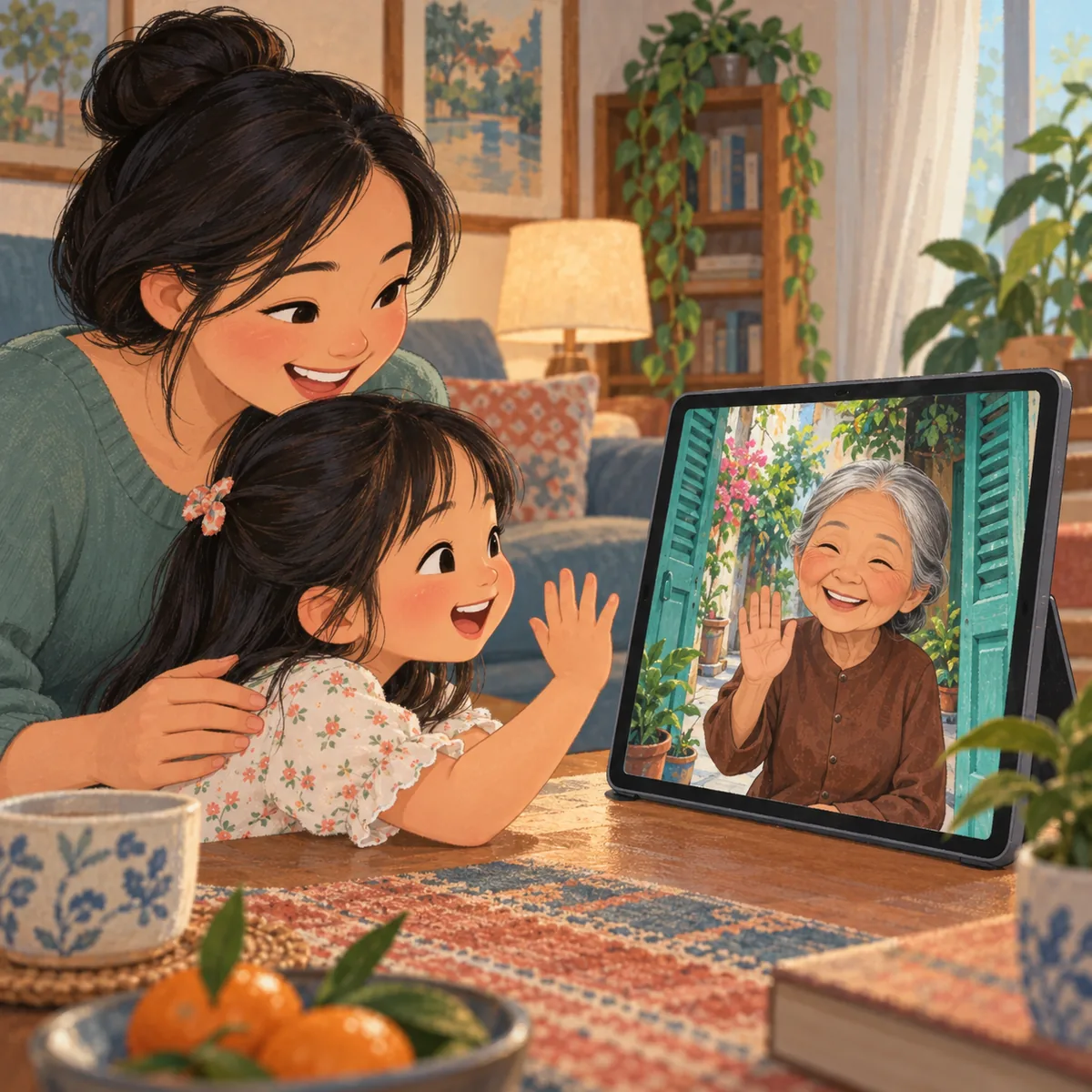
If relatives live far away, help the child send a short voice note or make a video call. Write the chosen greeting on a card and let the child hold up a drawing while they say it. Ask the relative to reply with one simple question, such as ‘Con khỏe hông?’ The child may answer with one word. Do not record or share a family call without the participants' agreement. A small, private exchange can feel more personal than a polished performance posted online.
Words to revisit after Tết
After Tết, keep two words in everyday use. A photo of the visit can prompt ‘Đây là Bà ngoại’ or ‘Con ăn bánh tét với Ba.’ Ask the child to tell one memory to a relative a week later. Reusing the words outside the holiday helps them become part of the family language. The point of these activities is not to complete a festival lesson; it is to make Vietnamese useful whenever the family remembers, cooks, greets, and gathers.
Are you ready to support your child's journey? Explore our Tiếng Việt Của Con series today and give them the gift of the family language.
Book a free trial for my child
Frequently asked questions
What Tết greeting can a young child say?
Choose one greeting before Tết begins: ‘Con chúc ông bà năm mới vui khỏe!’ A younger child can say just ‘Dạ, con chúc Tết ông bà.’ Practice with a picture of the relative so the words have a person attached. Explain that different families phrase wishes differently; ask grandparents which expression feels natural to them.
How can we practice Vietnamese after Tết?
After Tết, keep two words in everyday use. A photo of the visit can prompt ‘Đây là Bà ngoại’ or ‘Con ăn bánh tét với Ba.’ Ask the child to tell one memory to a relative a week later.


0 Comments
Log in to leave a comment.