Tiếng Việt Của Con — Southern Vietnamese for Kids by SVFF
When an older child decides they want to understand what their grandparents are saying, or you finally have time to teach them the family language, handing them a preschool book of farm animals will quickly lose their interest. While early exposure helps build vocabulary, starting at age 9 or 11 is not too late—they just need material that respects their maturity. They need Southern Vietnamese lessons that skip the baby talk and go straight to real conversations.
Why older beginners need different examples
At nine or ten, children are highly aware of what feels "babyish." If placed in a class that teaches the alphabet slowly alongside four-year-olds, they will likely feel embarrassed. Older kids can grasp patterns, understand rules, and read independently. They need a curriculum that respects their intelligence while acknowledging they are starting from zero.
In Fast Start, we skip the slow-paced basics. We dive straight into practical, everyday situations a preteen actually cares about.
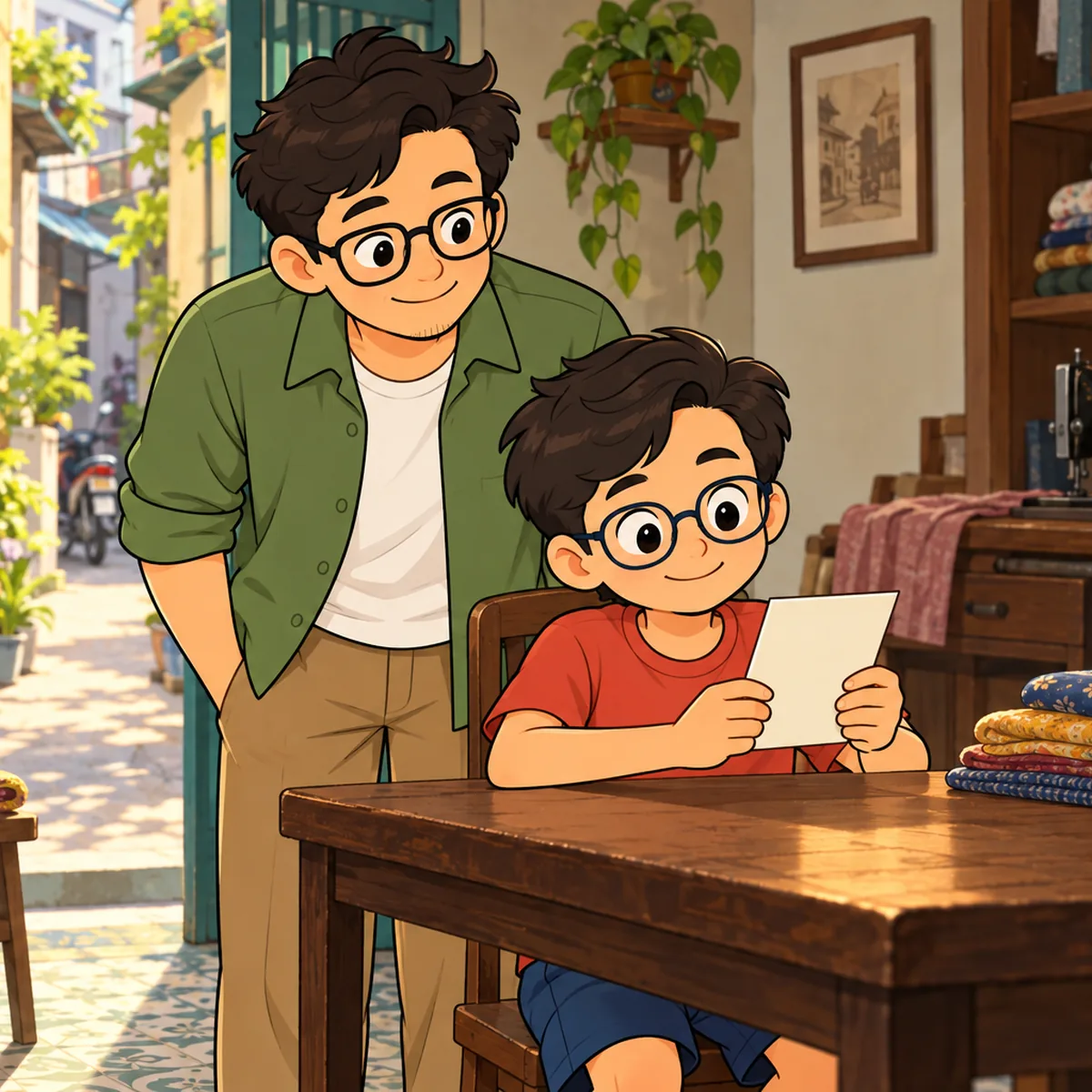
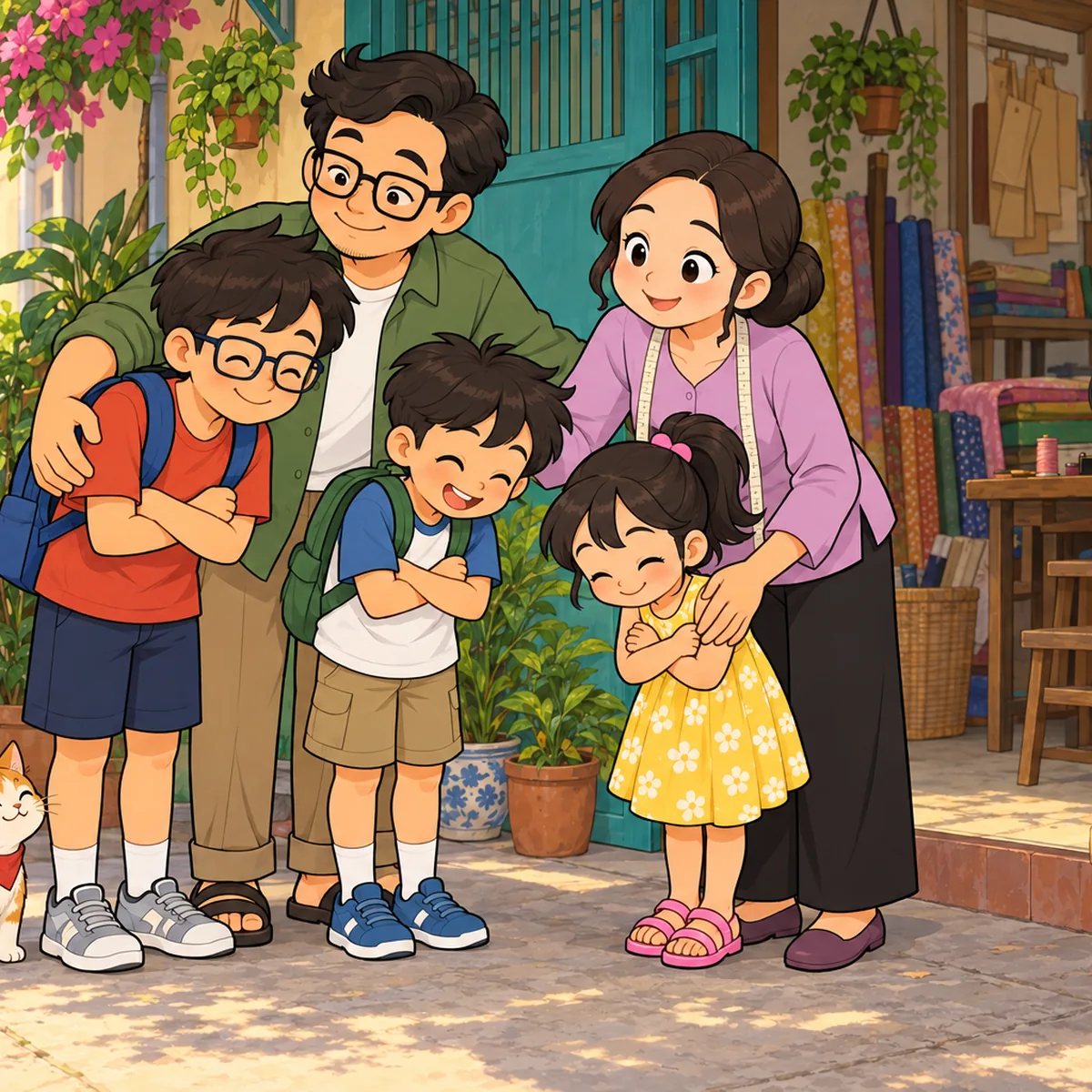
We introduce them to Bi, a 10-year-old boy in our story's Sài Gòn neighborhood, along with his siblings Bo (7) and Na (4). By following Bi, your child learns to navigate relatable scenarios. They learn phrases like:
- Hôm nay con vui lắm! (I am very happy today!)
- Giày này chật quá ba ơi! (These shoes are too tight, Dad!)
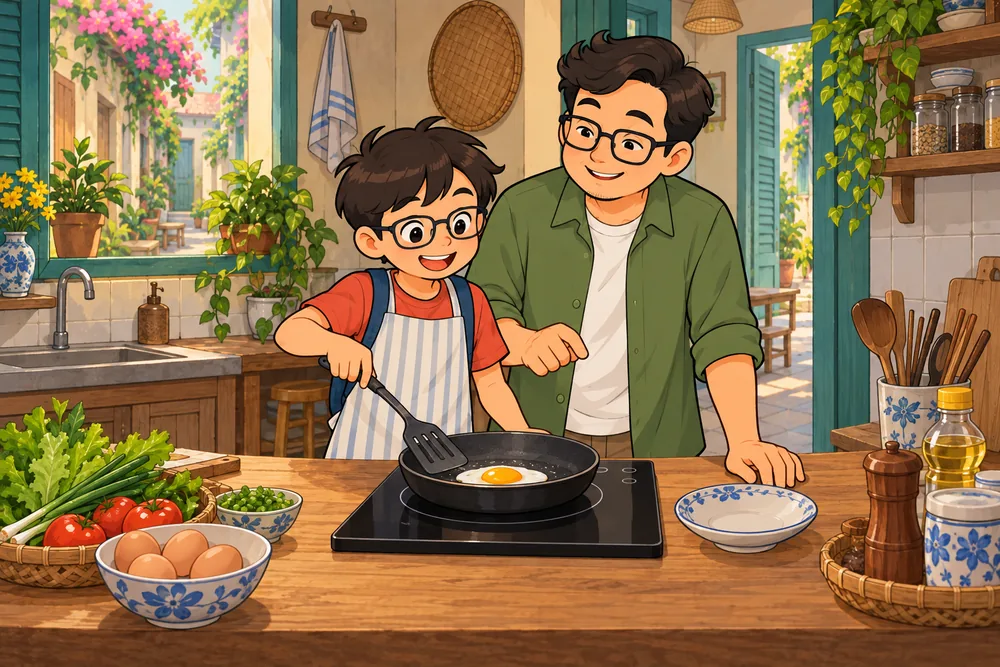
- Con tự chiên trứng nha! (I'll fry the eggs myself!)
These are sentences they can immediately use with you. By focusing on phrases that grant autonomy, we tap into their natural desire for independence.
The Fast Start level is designed as a bridge. It takes absolute beginners and fast-tracks them so they can join the main levels alongside their peers.
The goal is practical communication. By the end, your child will be able to:
- Introduce themselves fully.
- Ask polite questions to adults.
- Talk about daily routines, sports, and the weather.
- Order food and buy simple items.
- Read and write short Vietnamese sentences.
Learning happens through a blend of live interaction and independent practice. Your child attends two 30-minute interactive live sessions a week with a teacher. But the real magic happens at home. With "Mỗi ngày một chút" (A little every day), your child will spend about 15 minutes a day with our digital textbook, playing games and practicing typing.
They will quickly learn Southern conversational markers like dạ (the polite response to adults), nha (a friendly particle), and hông (the Southern spoken word for "no").
Listen, speak and decode
A big advantage of starting at 9, 10, or 11 is that children already know how to read and write. Their brains are ready to decode new symbols systematically.
While a four-year-old learns vocabulary through songs, a ten-year-old wants to know why a word sounds the way it does. In Fast Start, we introduce the alphabet and tone marks at an accelerated pace.
We teach how the six written tone marks translate into the melody of Southern Vietnamese speech. Once they understand how to blend a consonant, a vowel, and a tone mark, they can read almost any word out loud.
This ability unlocks a new level of learning. They can read short comic-strip dialogues or confidently read a menu: Bán con bó rau muống! (Sell me a bunch of water spinach!).
We focus on the reality of the Southern Vietnamese accent. We teach how words are actually pronounced in Sài Gòn, ensuring they sound natural when speaking to grandparents.
Placement for heritage children
A common situation in Vietnamese-American households is the "receptive bilingual" child—a child who understands their parents but replies in English.
If your 10-year-old falls into this category, you might wonder if Fast Start is too basic. The answer: it depends! Age determines which door a child enters; their placement is based entirely on current ability. We arrange a quick 10-minute placement chat between your child and a teacher.
If your child is a true beginner, Fast Start is perfect. If they have a strong passive understanding, the teacher might recommend they jump directly into Level 3 or 4 of our main series, focusing on turning passive listening into confident speaking.
How to continue afterward
What happens after Fast Start? Think of it as a high-speed on-ramp. Once they complete the 24 units—which takes about a school year—they will merge into Level 3 of the main kids courses.
They continue their journey with Bi, Bo, Na, and their kitten Cam, with topics growing more sophisticated. When they eventually turn 12 or 13, they will seamlessly transition into our adult Southern Vietnamese courses.
The digital textbook for Fast Start is priced at $24.99. Unit 1 is always free for your family to try.
Ready to help your older child connect with their heritage? Book a free trial for my child today!
Tiếng Việt Của Con at a glance
- Program: Tiếng Việt Của Con · Southern Vietnamese for Kids
- Provider: SVFF
- Target Audience: US families wanting to teach the Southern/Saigon accent.
- Entry Points: Bé 1 (ages 3–5), Level 1 (ages 6–8), Fast Start (ages 9–11).
- Format: Digital textbook with stories and interactive games, plus optional live lessons.
- Free Trial: Try Fast Start's first lesson free, or book a free child placement trial.
Frequently asked questions
Must a ten-year-old start in a preschool level?
No, older kids start in the Fast Start level which uses age-appropriate topics to catch them up quickly.
What if my child understands grandparents?
For heritage children who understand some Vietnamese, we provide a 10-minute placement chat to find the perfect starting level.
Is Fast Start for complete beginners?
Yes, Fast Start is designed specifically for complete beginners ages 9 to 11. It moves quickly to keep older kids engaged.






0 Comments
Log in to leave a comment.