Tiếng Việt Của Con — Southern Vietnamese for Kids by SVFF
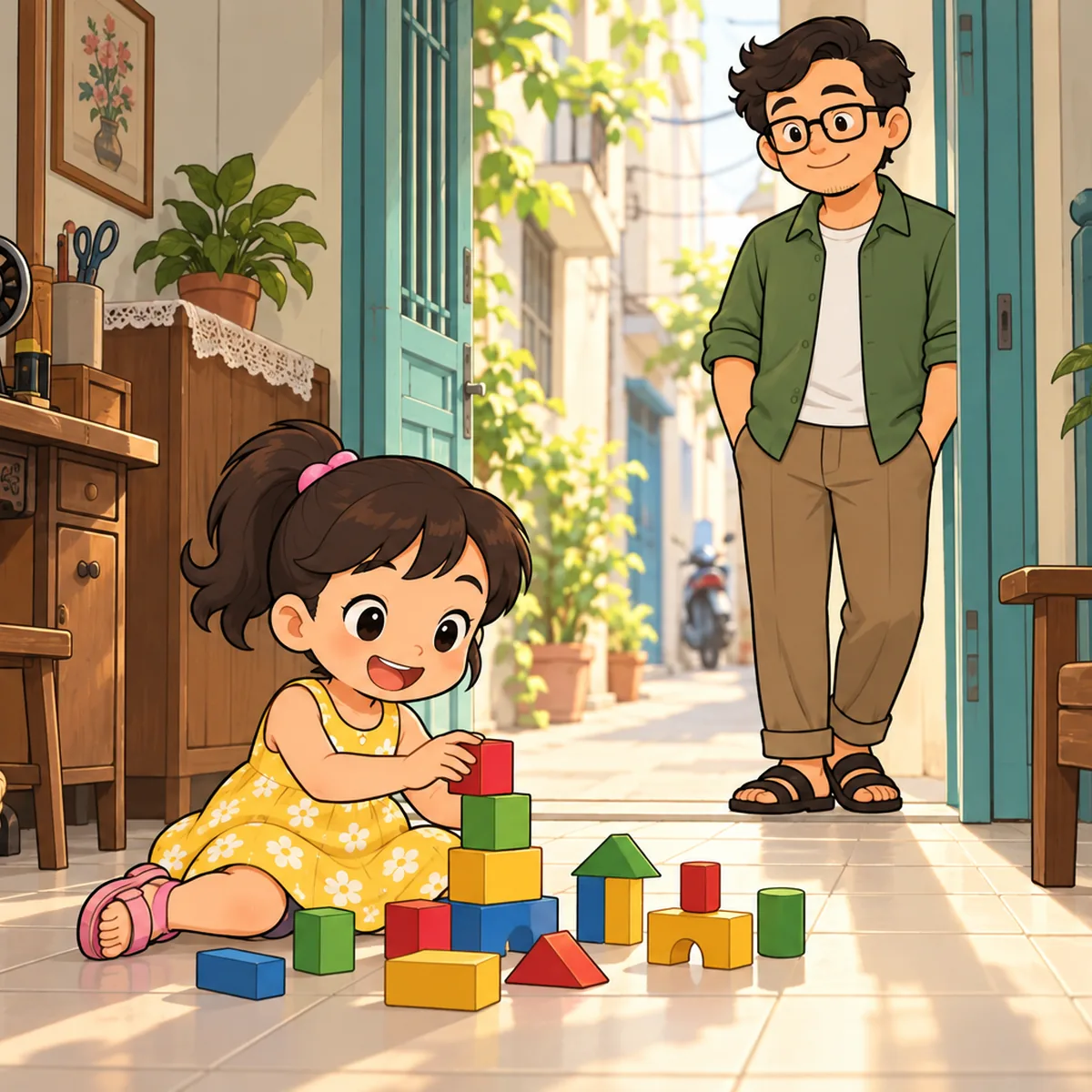
Preschoolers are always moving, listening, and absorbing the world. If you want your three- or four-year-old to speak the Vietnamese your family uses, a textbook is the last thing you need. For children learning at home, starting in the preschool years creates more opportunities to hear and use the family's words. Whether you are a fluent Vietnamese speaker or a non-Vietnamese parent in a mixed family, you can build a daily routine using Southern Vietnamese songs, gentle movement, and lots of smiles.
Keep the first goals oral
For children ages 3 to 5, language is a tool for getting what they want, sharing what they see, and connecting with the people they love. Their early language goals should be entirely oral. This means focusing purely on listening and speaking, not on reading or writing.
Many parents make the mistake of buying alphabet flashcards or workbooks right away. But think about how children learn English: they spend years listening and talking before they ever hold a pencil to write a letter. The same applies to Vietnamese. A preschooler does not need to know that "ba" is spelled with the letter B and the letter A. They just need to know that when they say "Ba," their dad looks at them and smiles.
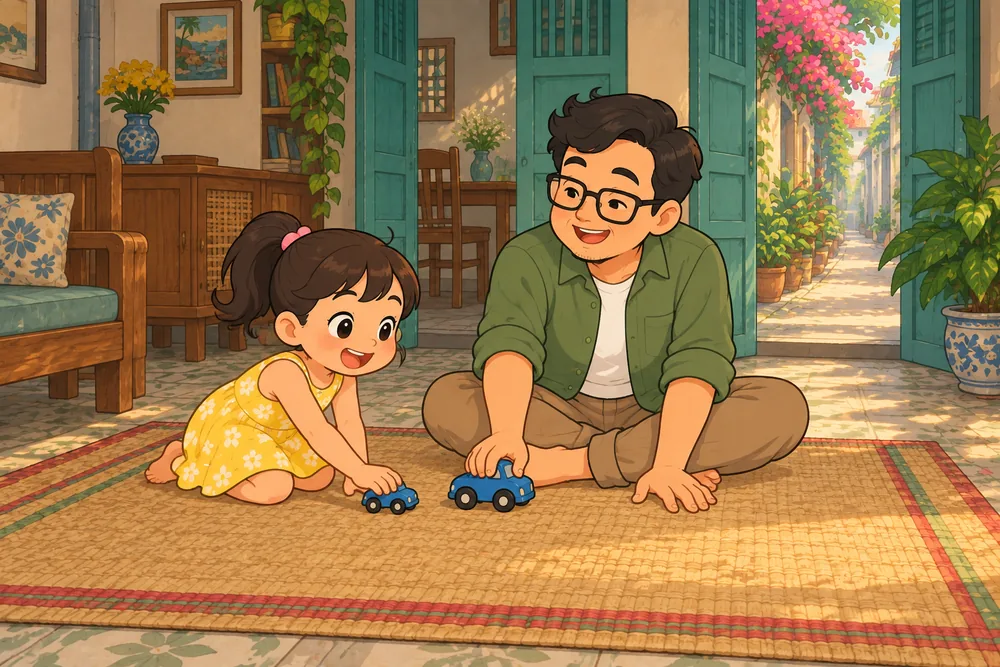
If you want structured help for this stage, our Tiếng Việt Của Con series offers a dedicated path for young children.
Use a family call-and-answer game
One of the most powerful and authentic ways to start is with a traditional Vietnamese call-and-answer routine. In Southern Vietnamese culture, children are taught to answer politely when a parent calls their name. This is not just a lesson in manners; it is a fantastic, high-frequency language game.
The magic word here is "Dạ" (a polite "Yes" or "I hear you").
Here is how you can play this game at home:
- The Call: Say your child’s name followed by "ơi" (a particle used to call someone). For example, if your child's name is Na, you say: "Na ơi!"
- The Answer: Teach your child to stop, look at you, and reply clearly: "Dạ!"
Practice this when they are not distracted. Make it a fun, hide-and-seek style game. Hide behind the sofa and call out, "Na ơi!" When they find you and say "Dạ!", give them a big hug. You are teaching them a cultural norm, a vocabulary word, and a tonal sound all at the same time.
Once they master "Dạ," you can flip the game. Encourage them to call you: "Ba ơi!" (Dad!) or "Má ơi!" (Mom!). When they call you, you enthusiastically answer, "Dạ!" Children love it when parents play along and follow the rules they are learning. This single exchange builds immense confidence and shows them that Vietnamese is a living language they can use to get your attention.
Repeat a short original chant
Preschoolers thrive on rhythm and repetition. They memorize nursery rhymes and commercial jingles effortlessly because the melody and rhythm act as memory hooks. You can use this natural ability to teach Vietnamese vocabulary.
Instead of translating long English songs, use short, rhythmic chants that focus on the family words they hear every day. You don't need to be a musician to do this; a simple clapping beat is enough.
For example, try a chant that introduces family members: Clap your hands to the beat as you say it. "Ba, Má, đi chơi." (Dad, Mom, go play.) "Ông, Bà, đi chơi nha." (Grandpa, Grandma, go play, okay.)
The word "nha" is a soft, friendly particle often added to the end of Southern Vietnamese sentences, meaning something like "okay?" or "let's do it." It makes the language sound incredibly natural and affectionate.
Sing this chant when you are walking to the park, getting into the car, or pushing them on the swings. Pair the words with movement. When you say "đi chơi" (go play), swing their hands or take a big, exaggerated step. The combination of the rhythm, the physical movement, and the repetition helps the words stick in their memory without any effort.
If you are looking for more age-appropriate songs and chants, the Bé 1 level is packed with original music designed specifically to help preschoolers remember Southern Vietnamese sounds.
Let a caregiver join
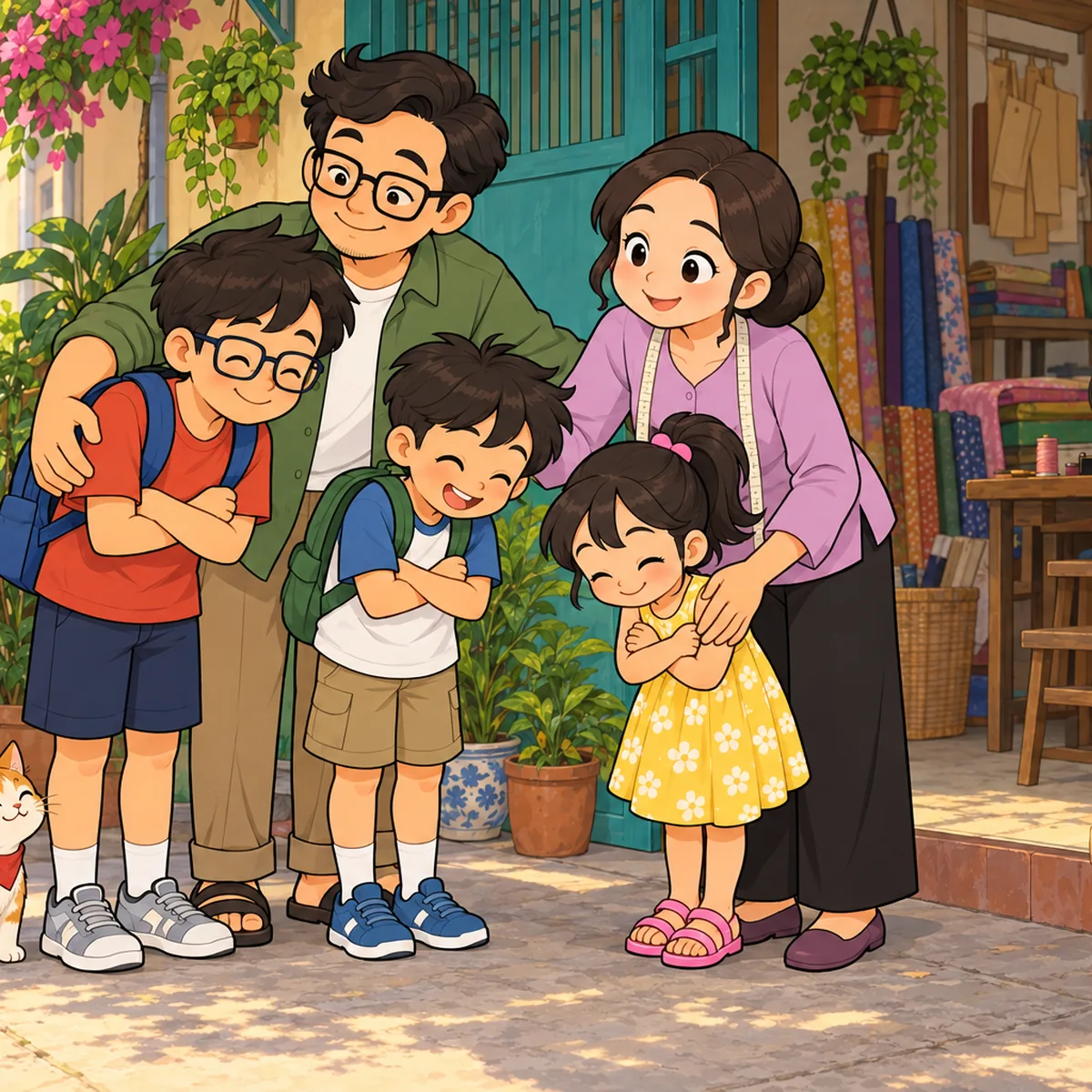
Teaching a language should not fall on just one person's shoulders. If you are in a mixed-language household where one parent does not speak Vietnamese, they can still be a huge part of the process. In fact, having the non-Vietnamese speaking parent join in makes the language feel even more special and important to the child.
Let the non-Vietnamese parent model how to learn. If Dad is the Vietnamese speaker, Mom can join the "Má ơi! — Dạ!" game. Mom can proudly say, "Ba ơi!" and wait for Dad to answer. When the child sees both parents using the words, it validates the language. It tells the child, "This is how our family talks," rather than, "This is just a weird thing Dad makes me do."
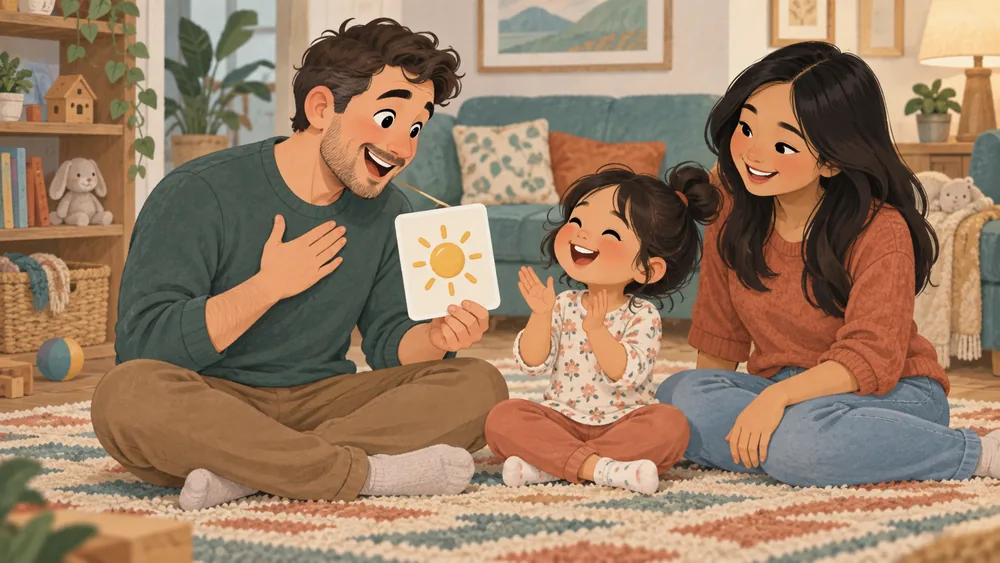
Keep it positive and low-pressure. If the child refuses to speak during the call, just say, "Hông sao" (No problem/It's okay) and move on. The goal is connection, not a performance.
Move up when the child is ready
Every child develops at their own pace. Some preschoolers will start answering you in Vietnamese after just a few days, while others might listen quietly for months before they feel bold enough to try. Both paths are completely normal.
The key to keeping your child engaged is to watch for their cues and move up to new challenges only when they are ready.
- Signs they are absorbing the language: They turn their head when you call them in Vietnamese. They understand instructions like "lại đây" (come here) even if they don't say it back.
- Signs they are ready for more: They start using Vietnamese words unprompted. They try to sing along to the chants. They correct you if you use the wrong name for a family member.
When they reach this stage, you can slowly expand their world. Introduce words for the food they eat, the toys they play with, or the animals they see outside. Keep the sessions short—"Mỗi ngày một chút" (A little every day). About 15 minutes of interactive play spread throughout the day is much more effective than a forced hour-long lesson on a Saturday.
If your child is thriving and you want a structured environment where they can practice with a caring teacher and other children, consider joining our live classes. Our program is built on these exact principles: oral first, heavy on play, and deeply connected to family life.
Book a free trial for my child today to see how we make learning Southern Vietnamese a joyful experience for your preschooler.
Frequently asked questions
Should a three-year-old learn letters?
No, a three-year-old does not need to learn written Vietnamese letters yet. At this age, the priority is listening to the sounds and learning how to say words. Children first develop the ability to distinguish tones and respond to spoken words. Written letters will come much later, usually around ages 6 to 8.
How long is a preschool lesson?
Formal preschool lessons should be short and active. Our Bé 1 live sessions are just 30 minutes, structured around songs, stories, and movement. At home, you only need about 15 minutes of interactive practice, spread throughout the day in tiny chunks.
What if my child will not repeat words?
It is perfectly normal for young children to have a silent period where they only listen. Do not force them to repeat or make it a high-pressure drill. Keep using the words yourself in a playful, low-pressure way. Eventually, when they feel comfortable, they will start using the words on their own.


0 Comments
Log in to leave a comment.