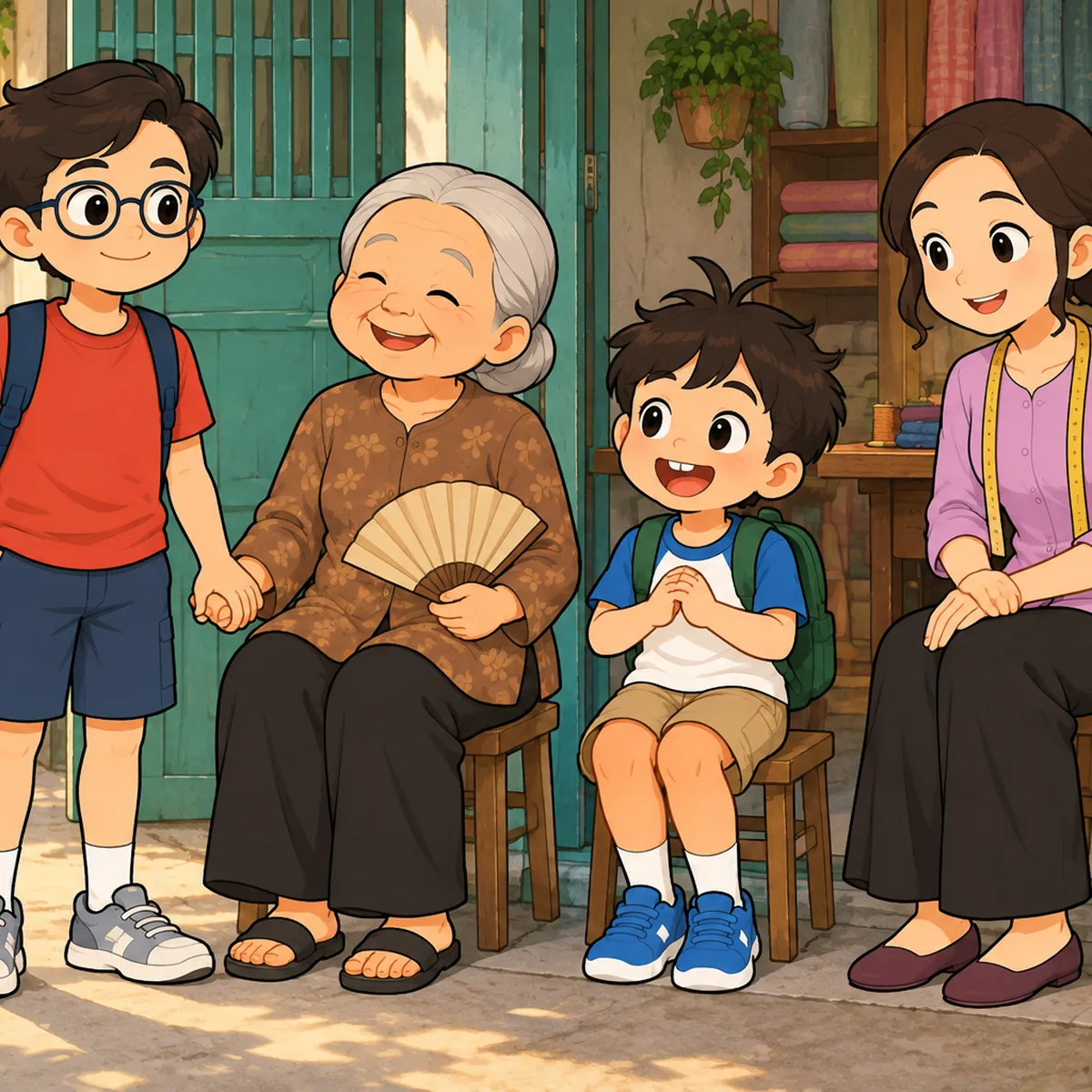
Tiếng Việt Của Con — Southern Vietnamese for Kids by SVFF
If you are searching for a Vietnamese class or app for your child in the US, you will quickly notice that most teach the Northern dialect. But because early US refugee communities were strongly shaped by people from the former South, many Vietnamese-American families speak Southern Vietnamese at home. If your child's grandparents live in Sài Gòn or Little Saigon, learning the Southern accent means they won't have to re-learn how to say bệnh (sick) instead of ốm, or ba má instead of bố mẹ. Matching the dialect to your family's speech is the fastest way to build connection.
What changes in sound and vocabulary
Vietnamese is a single national language, which means the written language and grammar are largely the same across the country. However, the spoken language has distinct regional flavors, much like American English compared to British or Australian English.
When comparing Northern vs Southern Vietnamese for kids, the biggest differences you will notice are in daily vocabulary and pronunciation.
Everyday vocabulary differences Children learn through everyday routines, which means the first words they learn are often the ones that differ the most between regions. For example:
- Mom: Southern families say má, while Northern families say mẹ.
- Polite yes / answering: Southern children say dạ (a soft, respectful acknowledgment), whereas Northern children say dạ.
- No: Southern speakers naturally soften the word to hông, even though it is spelled không (which is how Northern speakers pronounce it).
- Okay / tag word: Southern families end sentences with nha (like "Let's go, nha!"), while Northern families might use nhé.
Pronunciation and tones The pronunciation of certain consonants also changes. For instance, the letter "v" in the South is often pronounced like a "y" (so vui sounds like "yui"), whereas in the North, it sounds like a clear "v".
Additionally, while written Vietnamese always has six tones (an unmarked flat tone plus five written marks), Southern speakers merge two of these tones (hỏi and ngã) in spoken conversation, pronouncing them both with a low dipping sound. Northern speakers pronounce all six tones distinctly.
Match grandparents' speech
The ultimate goal of teaching your child a heritage language is to foster family connection. When a child learns the words their grandparents use, they can immediately apply what they learn in real life.
Consider a real parent example from our community. A mother living in the US tried using a popular language-learning app to teach her five-year-old son Vietnamese. The app taught standard Northern Vietnamese. When the boy proudly showed off his new words to his Southern grandmother, she corrected his vocabulary, telling him to say má instead of mẹ. The child became confused and frustrated, wondering why his app and his grandmother disagreed. He eventually stopped using the app altogether.
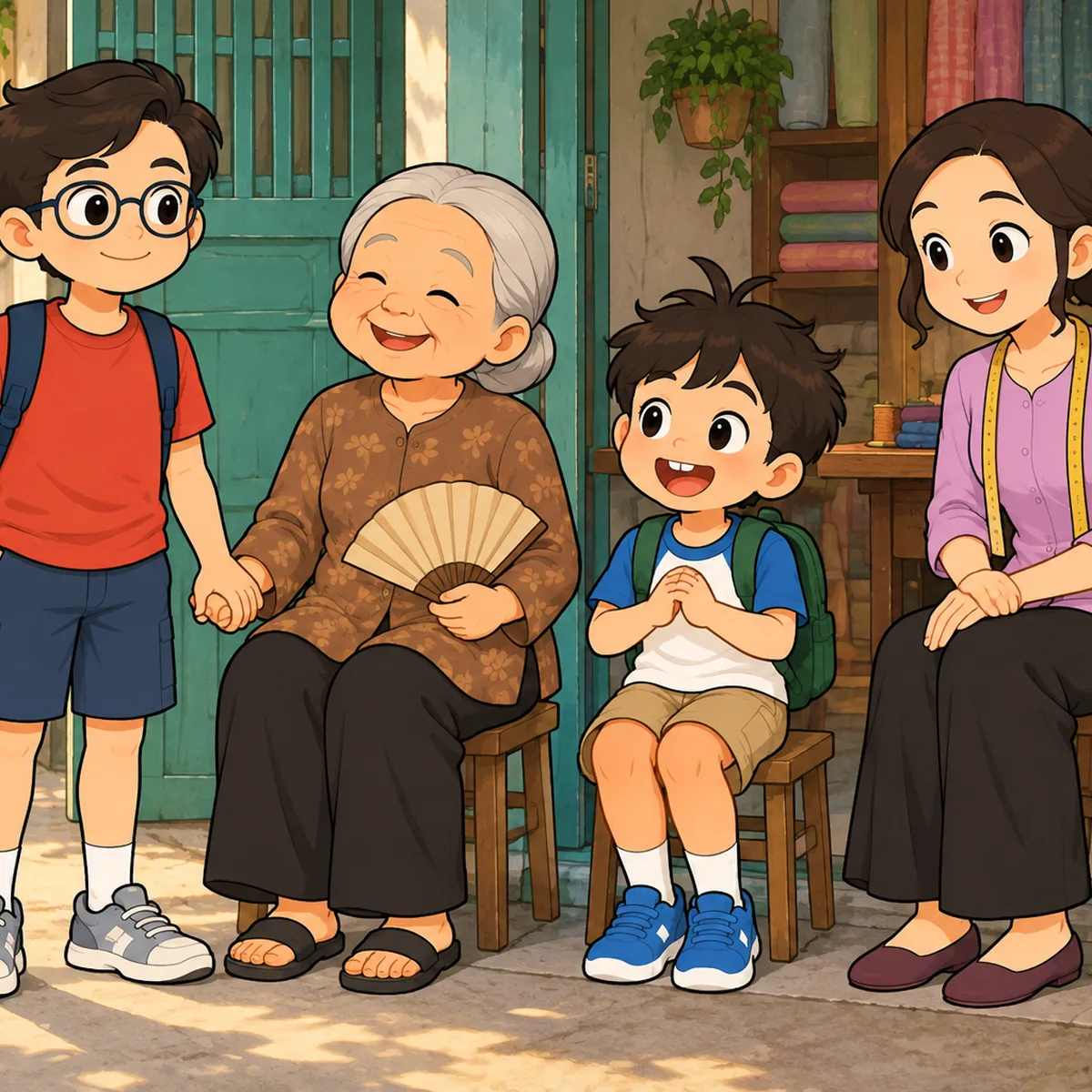
By switching to a curriculum that focuses on the Southern accent, the child could finally use his words at home without friction. When he learned to call out "Bà ngoại tới chơi!" (Grandma came to play!), his grandmother beamed, and that positive reinforcement encouraged him to keep speaking.
If your extended family speaks Southern Vietnamese, learning that specific dialect removes a major barrier to communication. It ensures that the language your child learns on a screen matches the language they hear at the dinner table.
Keep spelling consistent
Parents sometimes worry that if their child learns the Southern accent, they won't learn "proper" Vietnamese spelling. This is a misconception.
No matter the spoken accent, Vietnamese spelling rules are national and standardized. The tone marks (huyền, sắc, hỏi, ngã, nặng) are written exactly the same everywhere in the country. A word like sữa (milk) is always spelled with the ngã (~) tone mark, even if a Southern child pronounces it with a dipping hỏi sound.
In our program, we teach children the correct standard spelling while allowing them to pronounce words naturally in the Southern way. This means they will eventually be able to read any Vietnamese book or newspaper, regardless of where it was published, while still sounding like a natural member of their own family.
Compare three child-friendly audio phrases
To understand how this sounds in practice, let's look at three simple phrases that children use every day.
1. "Dạ" (Polite yes / I'm here) This is the most important word for any Vietnamese child. When a parent calls their name ("Bi ơi!"), the correct, respectful response is Dạ!
2. "Ba ơi, má ơi!" (Dad, Mom!) Calling for parents is one of the first things young children do. The Southern ba and má are incredibly easy for young children to say because they use simple lip sounds.
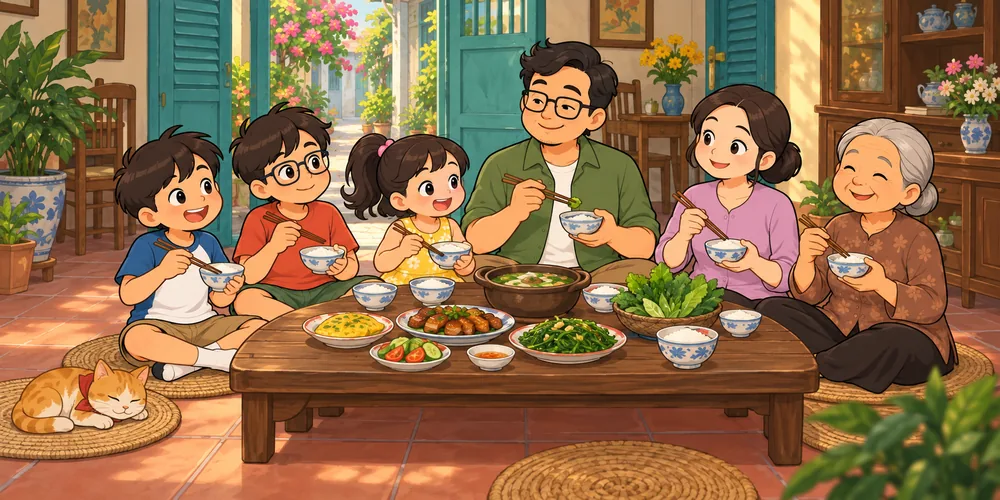
3. "Ăn cơm nha!" (Let's eat rice, okay!) Mealtime is a core part of Vietnamese family life. Adding the particle nha at the end makes the sentence friendly, informal, and distinctly Southern.
What if your family is mixed? Perhaps one parent is from Hanoi and the other is from Saigon. Which dialect should your child learn?
In this situation, consistency in early childhood is key. Here are a few practical tips for mixed-dialect families:
- Pick the primary caregiver's dialect: If one parent spends significantly more time speaking Vietnamese with the child, choose that parent's dialect for their formal learning.
- Follow the grandparents: If the child spends every weekend with the Southern grandparents but only sees the Northern relatives once a year, lean into the Southern accent so the child gets more active practice.
- Don't stress about mixing: It is completely normal for children in mixed families to blend vocabulary (saying má but ending sentences with nha). Let them communicate naturally. As they grow older, they will learn to distinguish between the two regional varieties.
Starting your child's Vietnamese journey
Choosing the right dialect is the first step in making your child's language learning successful and enjoyable. At SVFF, we created the Tiếng Việt Của Con (Southern Vietnamese for Kids) series specifically for overseas families who want their children to connect with their Southern roots.
Our program uses beautifully illustrated books, interactive games, and optional live lessons to give your child the exact words they need for daily family life.
If you have a child between the ages of 6 and 8, you can explore what they will learn in Level 1. We focus on building a strong oral foundation first, starting with the very words they use to greet their parents and grandparents.
Ready to see how our Southern-focused approach can help your family? Book a free trial for my child today and experience a 10-minute placement chat with one of our teachers.
Frequently asked questions
Will a Southern-speaking child understand Northern relatives?
Yes. While there are vocabulary and pronunciation differences, they are mutually intelligible dialects of the same language. Children naturally adapt to hearing different accents over time.
Are there six written tone marks?
Vietnamese has six tones (five written marks plus the unmarked flat tone), but Southern speakers pronounce two of them (hỏi and ngã) with the same sound. The written spelling remains exactly the same nationwide.
Can a child switch accents later?
Yes, though it takes practice. Children who learn a strong foundation in their family's Southern accent can later learn to understand or even mimic Northern sounds if they move to Hanoi or study a Northern-based curriculum, much like learning to understand British versus American English.



0 Comments
Log in to leave a comment.