
Tiếng Việt Của Con — Southern Vietnamese for Kids by SVFF
For many Vietnamese-American families, the goal of language learning is highly specific: a child who can chat with Nội and Ngoại without a translator. With an estimated 2.3 million people in the U.S. identifying as Vietnamese, preserving the dialect your own family speaks matters. The U.S. Election Assistance Commission noted in 2016 that most Vietnamese people then living in the United States came from South Vietnam, and many families still speak Southern Vietnamese at home. Choosing Southern Vietnamese for kids means choosing the language of their heritage.
The history behind the home language
The first Vietnamese communities in the United States included many people from the former South, but no single regional label describes every Vietnamese-American family. Your child's most useful model is the speech of the relatives they know. Ask grandparents which address terms, food words, and greetings they use today. Record a few of those words with permission. A course can offer a consistent Southern model; a family conversation tells you how to make it personal.
Matching the vocabulary to the relatives
Begin with names, not abstract dialect rules. Does your child say Ba and Má? Which grandmother is Bà nội and which is Bà ngoại? Let each relative confirm how they want to be addressed. Place a photo next to the chosen word and practice a real greeting. When a textbook uses a different word, explain that it is another regional or family choice. Keeping the relationship clear matters more than winning a debate over terminology.
Overcoming the bilingual barrier
A child who understands Vietnamese but replies in English is still participating. Answer the meaning first, then offer one easy Southern Vietnamese reply: ‘Dạ, con muốn nước.’ Invite just dạ or nước if the whole sentence feels hard. Use the same prompt in low-pressure moments, such as getting a drink or opening a gift. Short, successful turns can gradually make Vietnamese feel like a language the child can use, not just one they hear.
Creating a Southern Vietnamese environment
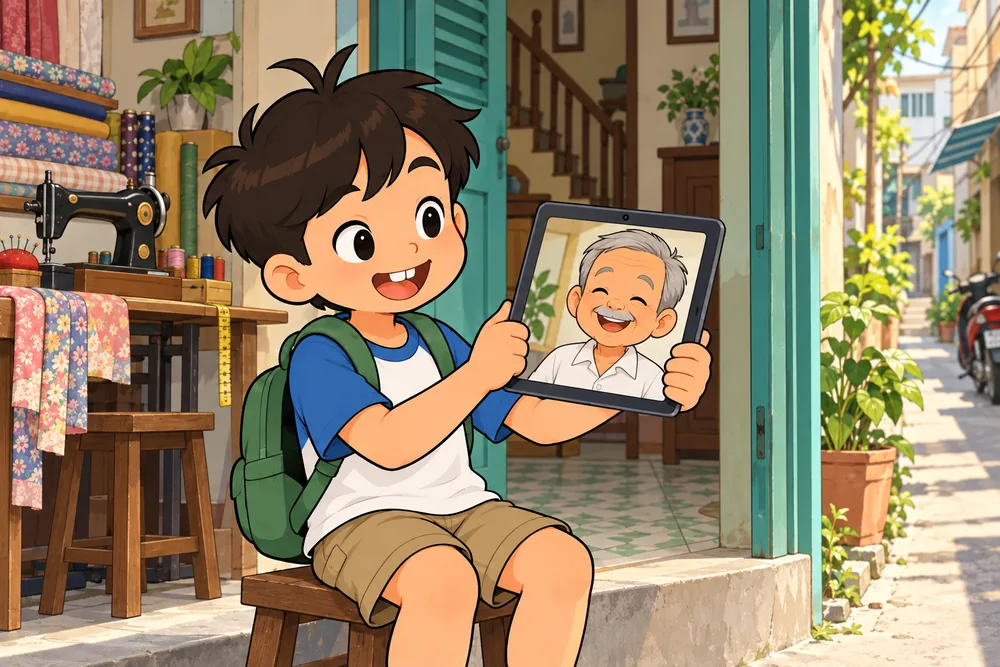
Put Southern Vietnamese into real routines: a greeting when a grandparent calls, a food word at dinner, and one short story together each week. Audio and digital stories can support this, but a family voice gives them context. Choose materials that state which accent they use and listen before committing to a long course. If relatives speak more than one dialect, keep a simple family word list showing who uses each version. Consistency does not require erasing anyone's voice.
Starting with confidence
Set a modest first goal: the child can greet one relative, answer one question, and tell one small thing about the day. Practice those moves before a call, then let the grandparent lead the actual conversation. Praise the effort without asking for flawless tones. The wider goal—connecting generations—can grow from these repeatable exchanges. A placement conversation with a teacher can help choose a starting level, but daily family contact gives the learning its purpose.
Are you ready to support your child's journey? Explore our Tiếng Việt Của Con series today and give them the gift of the family language.
Book a free trial for my child
Frequently asked questions
How can a child start speaking Southern Vietnamese with relatives?
Set a modest first goal: the child can greet one relative, answer one question, and tell one small thing about the day. Practice those moves before a call, then let the grandparent lead the actual conversation.
What if my child understands but answers in English?
A child who understands Vietnamese but replies in English is still participating. Answer the meaning first, then offer one easy Southern Vietnamese reply: ‘Dạ, con muốn nước.’ Invite just dạ or nước if the whole sentence feels hard.




0 Comments
Log in to leave a comment.