Tiếng Việt Của Con — Southern Vietnamese for Kids by SVFF
Parents often worry about screen time, but what if that time could actively help your child connect with their heritage? Early, ongoing exposure to Vietnamese is closely tied to vocabulary growth. By swapping out random cartoons for engaging, interactive Southern Vietnamese stories and games, you transform passive screen time into a powerful, active learning tool.
Turning passive watching into active learning
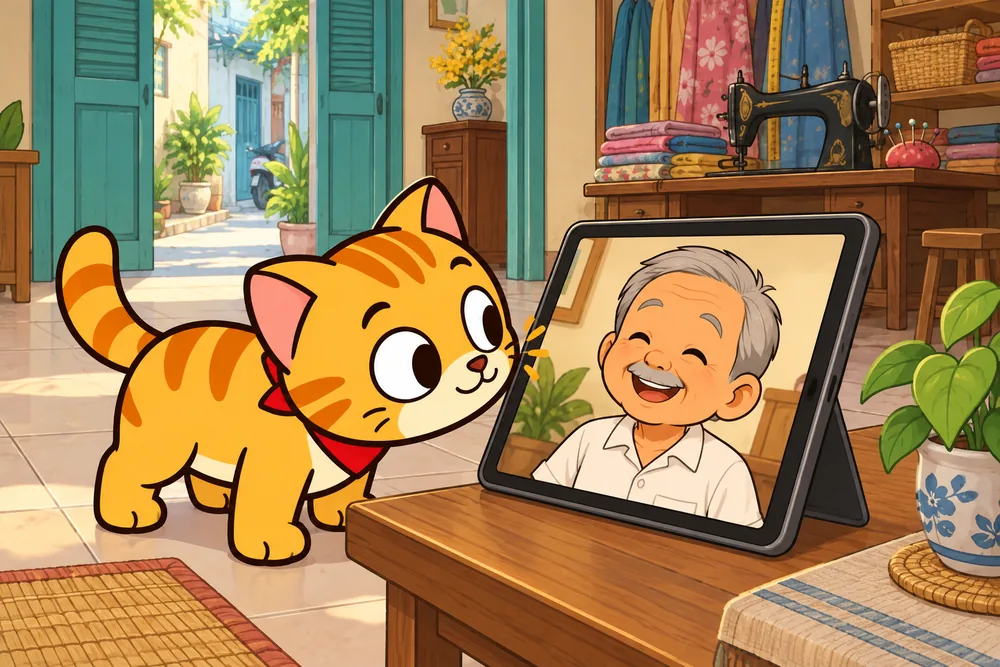
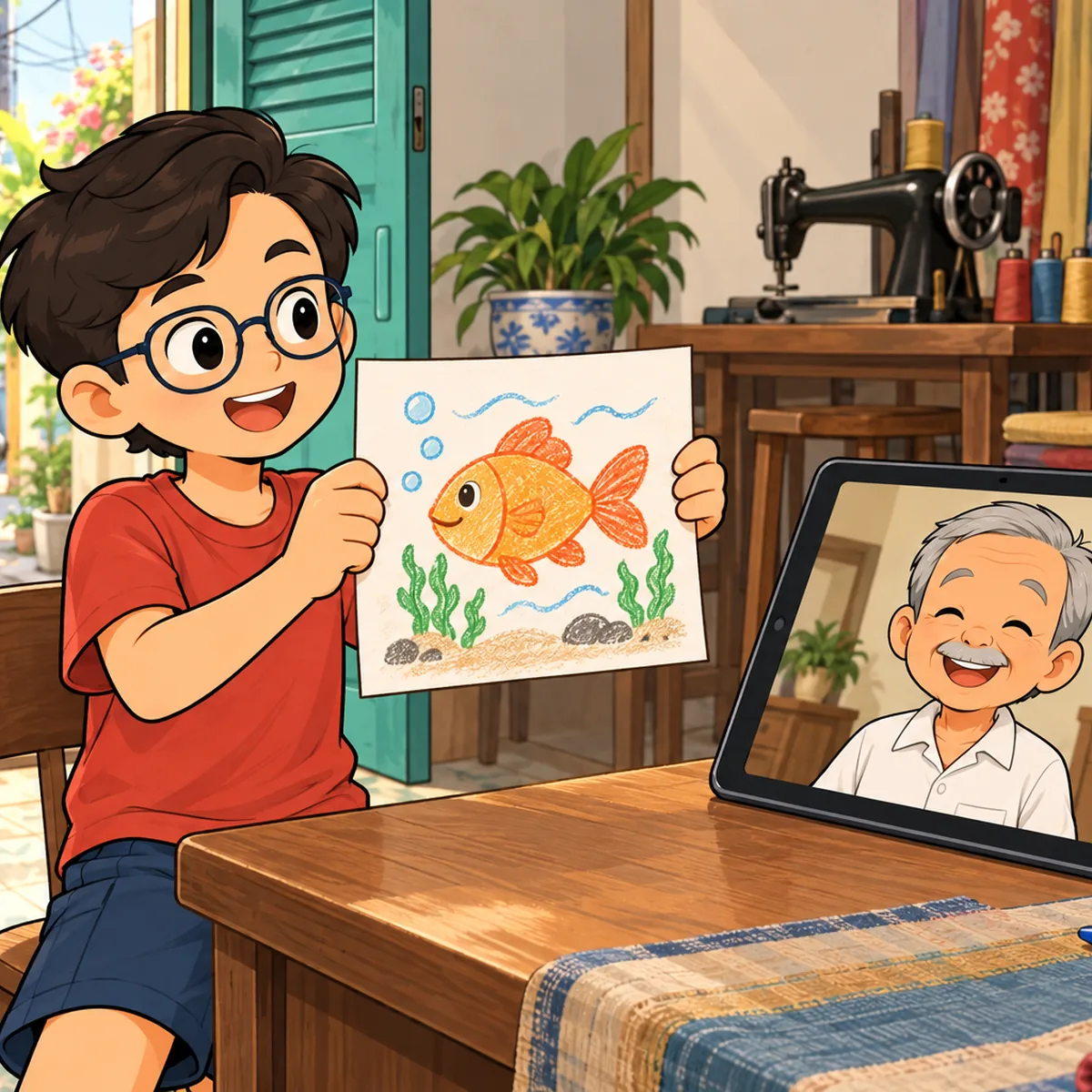
A video can introduce a word, but the useful learning happens when someone responds. Watch one short scene together, pause, and ask the child to point, choose, or say a word: ‘Cam chạy hay ngủ?’ If they answer in English, model the Southern Vietnamese phrase and let the story continue. Replay one favorite scene instead of letting an autoplay feed choose the next hour. The aim is a small conversation around a screen, not a promise that watching alone will produce fluent speech.
The value of interactive Southern Vietnamese games
An interactive game is useful when its sound, pictures, and task match. Before giving it to a child, play one round yourself. Can you hear the Southern word clearly? Does tapping the right picture produce a meaningful response? Is the screen free of distracting links and ads? A matching game can reinforce Ba, Má, and Cam, but it cannot replace a real person asking the child what they chose. Use games to start a turn, then carry the word into family life.
Short bursts of daily practice
Choose a short, predictable time rather than bargaining for ‘just one more’ clip. Five minutes of story, a pause to speak, and a few minutes away from the screen can fit into an ordinary day. The exact schedule should suit your child and household; no number of minutes is a guarantee of language progress. Keep the same small word set for several sessions. Familiarity makes it easier for the child to anticipate a phrase and answer before the narrator does.
Co-playing with your child
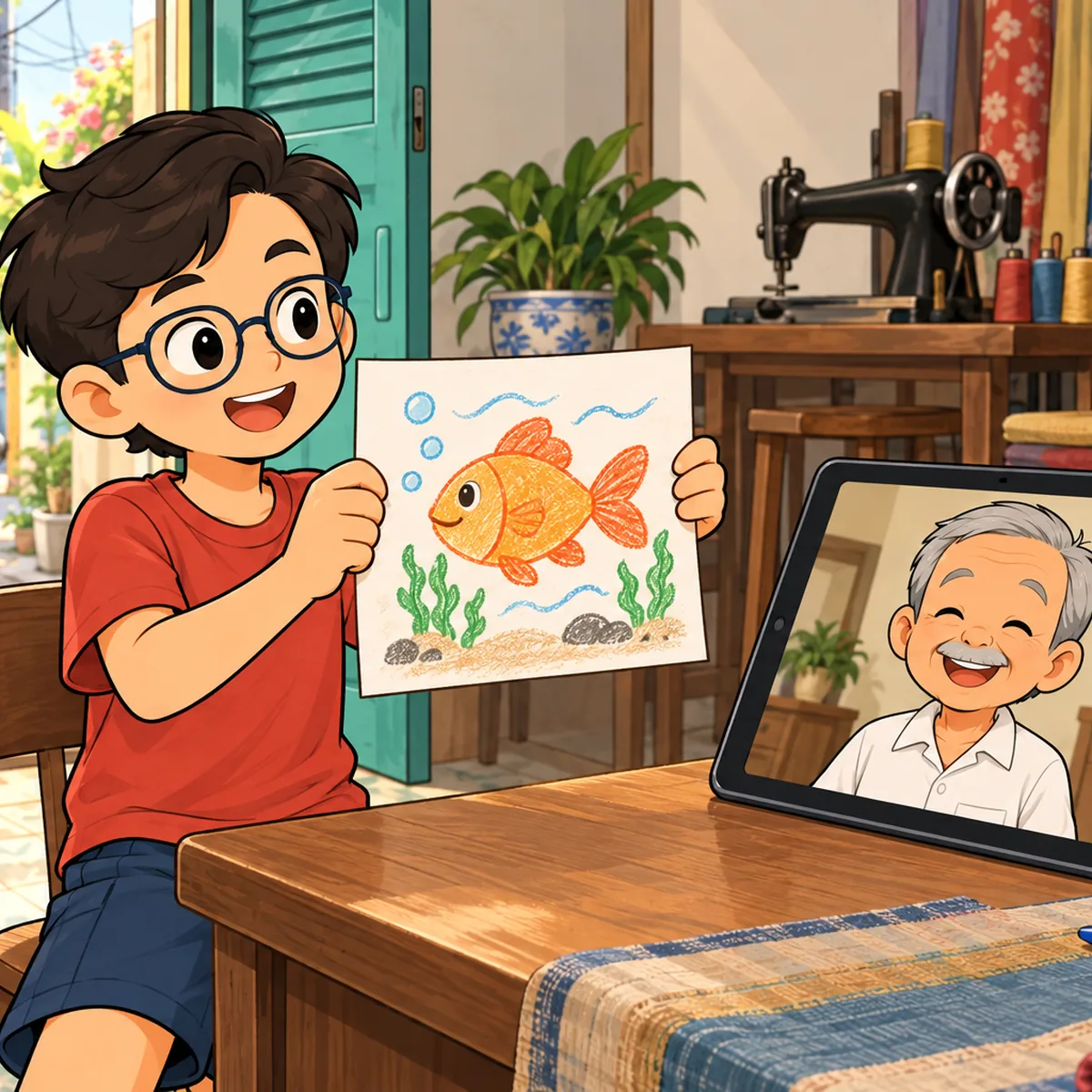
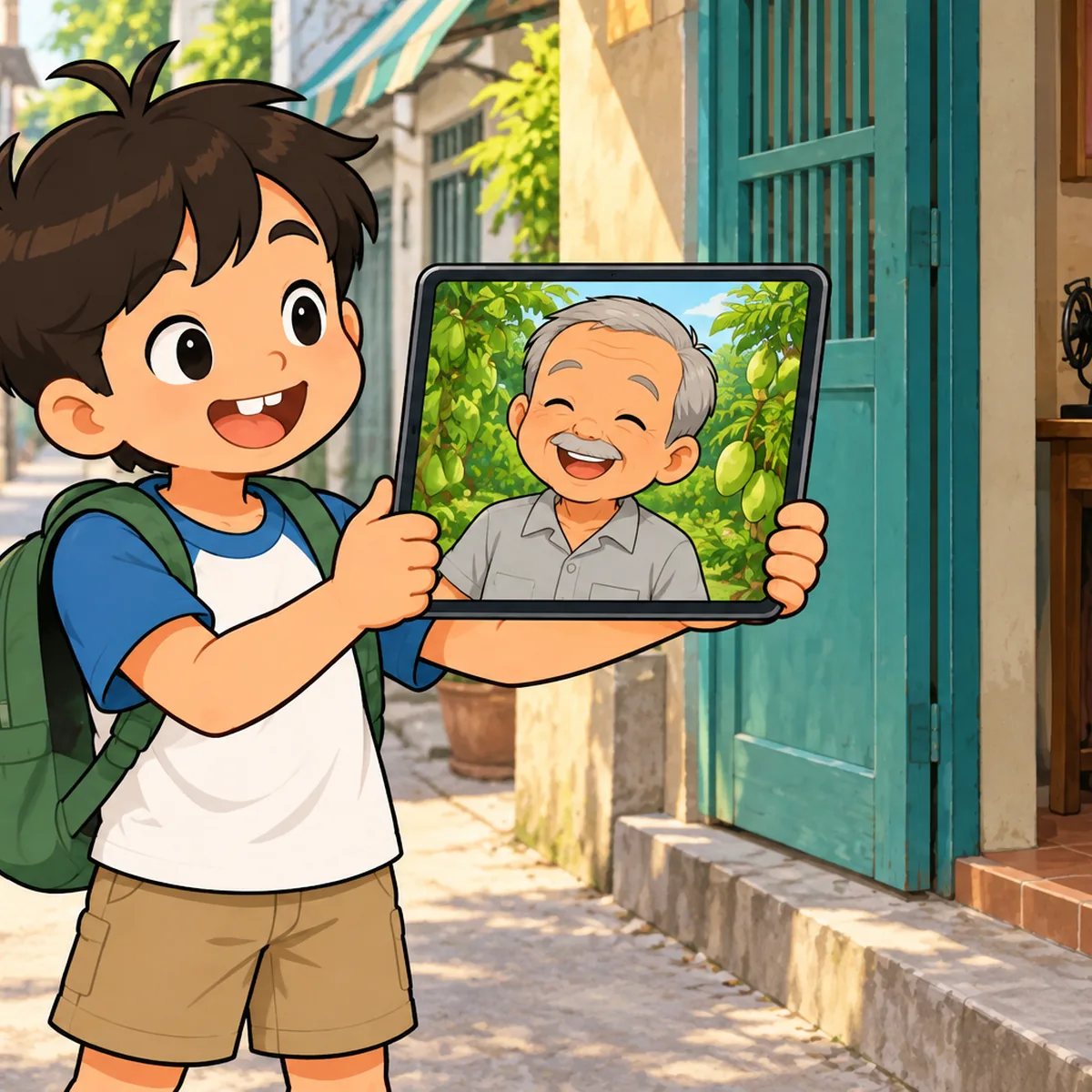
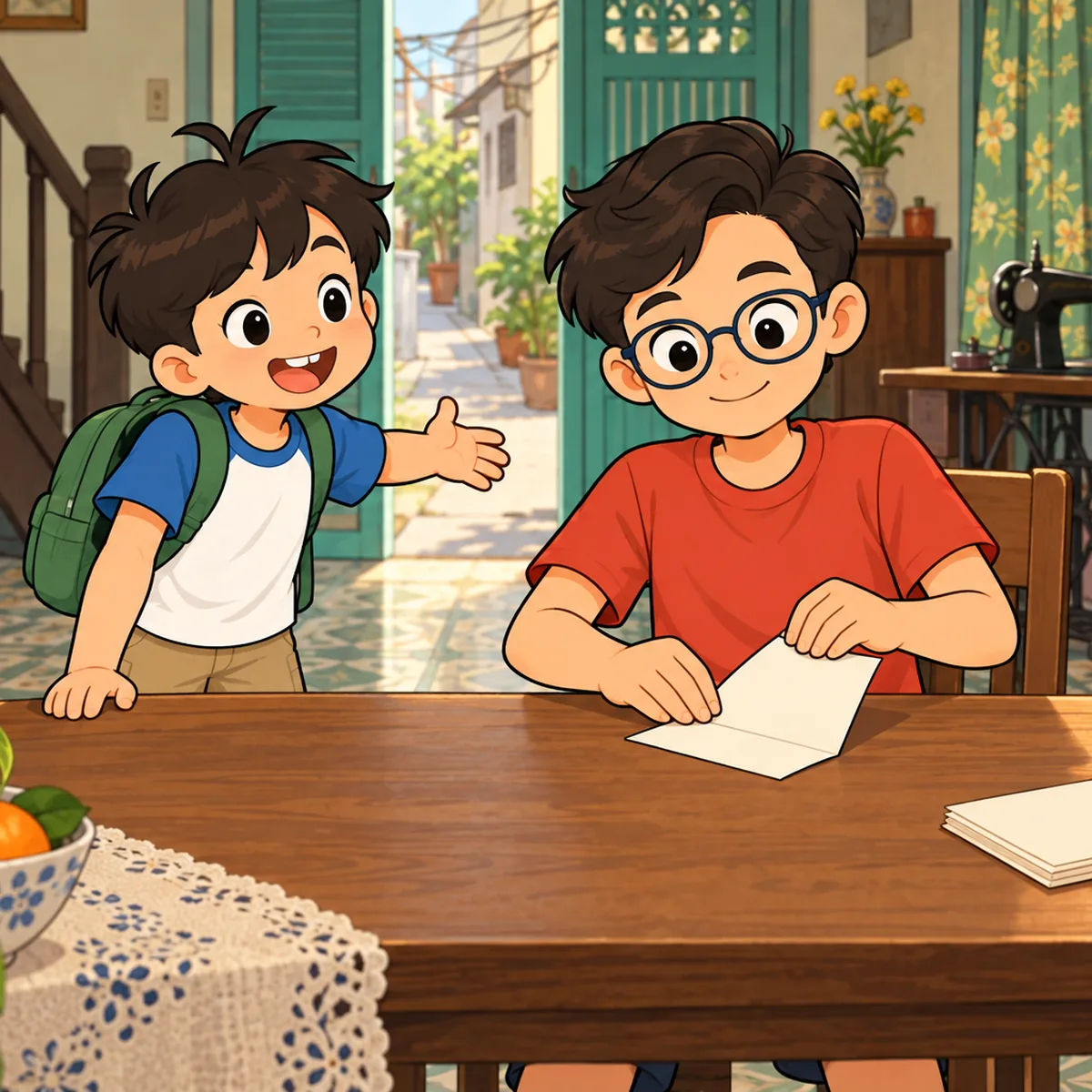
Sit beside the child for at least part of the activity. Ask them to show you what happened, make a silly wrong guess, or take the child's role in a game. If you do not speak Vietnamese, learn one phrase with them and invite a fluent relative to check it later. Let the child control a pause or replay when they need time. Shared play helps a digital lesson become something you can talk about at dinner, on a walk, or with grandparents.
Balancing screen and off-screen time
Move one word off the screen after every session. If the story showed Cam eating, ask ‘Cam ăn gì?’ while feeding a toy cat. If a song used chào, say it when someone comes home. Put devices away at a natural stopping point and let the child use the phrase with a person. Choose age-appropriate media and follow your family's screen rules; a useful Vietnamese clip does not cancel the need for sleep, movement, and real conversation.
Are you ready to support your child's journey? Explore our Tiếng Việt Của Con series today and give them the gift of the family language.
Book a free trial for my child
Frequently asked questions
Can a Vietnamese video teach a child to speak?
A video can introduce a word, but the useful learning happens when someone responds. Watch one short scene together, pause, and ask the child to point, choose, or say a word: ‘Cam chạy hay ngủ?’ If they answer in English, model the Southern Vietnamese phrase and let the story continue.
What makes a Vietnamese learning game useful?
An interactive game is useful when its sound, pictures, and task match. Before giving it to a child, play one round yourself.


0 Comments
Log in to leave a comment.