Tiếng Việt Của Con — Southern Vietnamese for Kids by SVFF
When you ask your child a question in Vietnamese, do they understand you perfectly but answer in English? You are not alone. Among 69 bilingual Vietnamese-American children studied in California, their average ability to understand the language was 80%, while their ability to speak it was just 36%. For heritage parents and grandparents in the US, the goal isn't just to pass on a language—it is to pass on your family's words, like Má or Nội, and that confident Dạ when they are called. This guide shows how to start, using the exact Southern Vietnamese accent your family already uses.
Choose the family dialect
One of the most important first steps is choosing which dialect of Vietnamese your child will learn. Vietnamese has distinct regional accents, primarily Northern, Central, and Southern. For many US-based families, the Southern Vietnamese accent is the language of home and community.
If your child's grandparents or relatives speak Southern Vietnamese, it makes sense for your child to learn that exact dialect. Matching your family's speech means your child will immediately recognize the words they learn. When a child learns the Southern words Ba (Dad) and Má (Mom), or politely answers Dạ (Yes/Polite particle), they are using vocabulary that builds an instant bridge to their relatives.
Many mainstream language apps and general courses default to Northern Vietnamese. While excellent for general learning, this can cause confusion for a heritage child who hears one pronunciation on a screen and a completely different one at the dinner table. If your family speaks Southern Vietnamese, learning the Southern dialect will prevent them from having to "re-learn" how to speak when talking to their grandparents. In our Tiếng Việt Của Con series, we focus exclusively on the Southern Vietnamese accent to ensure that what children learn online perfectly matches what they hear at home.
Start by age and current ability
Language learning looks completely different for a three-year-old compared to a ten-year-old. Putting a teenager into a preschool game, or expecting a toddler to read flashcards, is a quick way to lose their interest. Children should learn in a way that matches their cognitive development and readiness.
Children should advance by their language level, not by their birthday, but their age determines which "door" they walk through to begin:
- Ages 3–5 (Preschoolers): At this age, the goal is purely oral. Children learn best through songs, movement, and play. Our Bé 1 course gives them a gentle, fully oral start. We ask a parent or caregiver to sit nearby and help guide the child through listening and repeating, without any pressure to read or write.
- Ages 6–8 (Early Elementary): Children in this bracket are usually starting to read in English. They are ready to connect spoken sounds to written letters. In Level 1, we introduce the Vietnamese alphabet, basic tones, and short, simple sentences. They learn to decode familiar words without undergoing a grueling spelling marathon.
- Ages 9–11 (Older Beginners): An older child has different interests and a longer attention span. They don't want to sing preschool songs; they want to express opinions and talk about their day. For them, we offer the Fast Start course, an accelerated entry that respects their maturity while teaching the foundational sounds and structures.
- Ages 12 and up: Teenagers over 12 who are beginners will join our adult courses, which are better suited to their learning pace and social interests.
If your child already understands some Vietnamese, they don't need to start at the very beginning. We provide a quick 10-minute placement chat with a teacher, along with a simple listen-and-tap check, to find the perfect level for their current ability.
What a week of practice looks like
Consistency is the secret to language learning. However, consistency does not mean long, exhausting hours of study. For children, frequent and short bursts of exposure are much more effective than a single three-hour block on a weekend. A good target for steady progress is about 100 hours of Vietnamese exposure per year.
What does this look like in a typical week?
First, consider live interaction. Two 30-minute interactive sessions a week with a live teacher—whether one-on-one or in a small group—provide the core speaking practice. These sessions shouldn't be a lecture. Children should be moving to answer: tapping, pointing, and playing to respond.
Second, the home routine. The philosophy of “Mỗi ngày một chút” (A little every day) is key. About 15 minutes of daily practice at home makes a massive difference. This could be listening to a short story, playing a digital matching game, or doing a simple call-and-answer activity with a parent.

Book, app, community school or teacher?
Parents have more options than ever, and comparing them can be tricky. Should you download an app, buy a textbook, enroll in a local Saturday school, or hire an online teacher?
- Language Apps: Apps are accessible and fun, offering gamified repetition. However, most cross-market apps lack a specific Southern dialect choice, and they rarely get a child to produce spontaneous speech. They are great for vocabulary building but not enough on their own for conversational fluency.
- Local Community Schools: If you live in a major city, a local Vietnamese weekend school is a fantastic way to build community and cultural connection. The challenge for some families is the fixed schedule, the commute, or the fact that the local school might teach a different dialect than what the family speaks.
- Online Courses and Teachers: Online learning brings the classroom to your home. It offers flexible scheduling and the ability to choose exactly the curriculum and dialect you want.
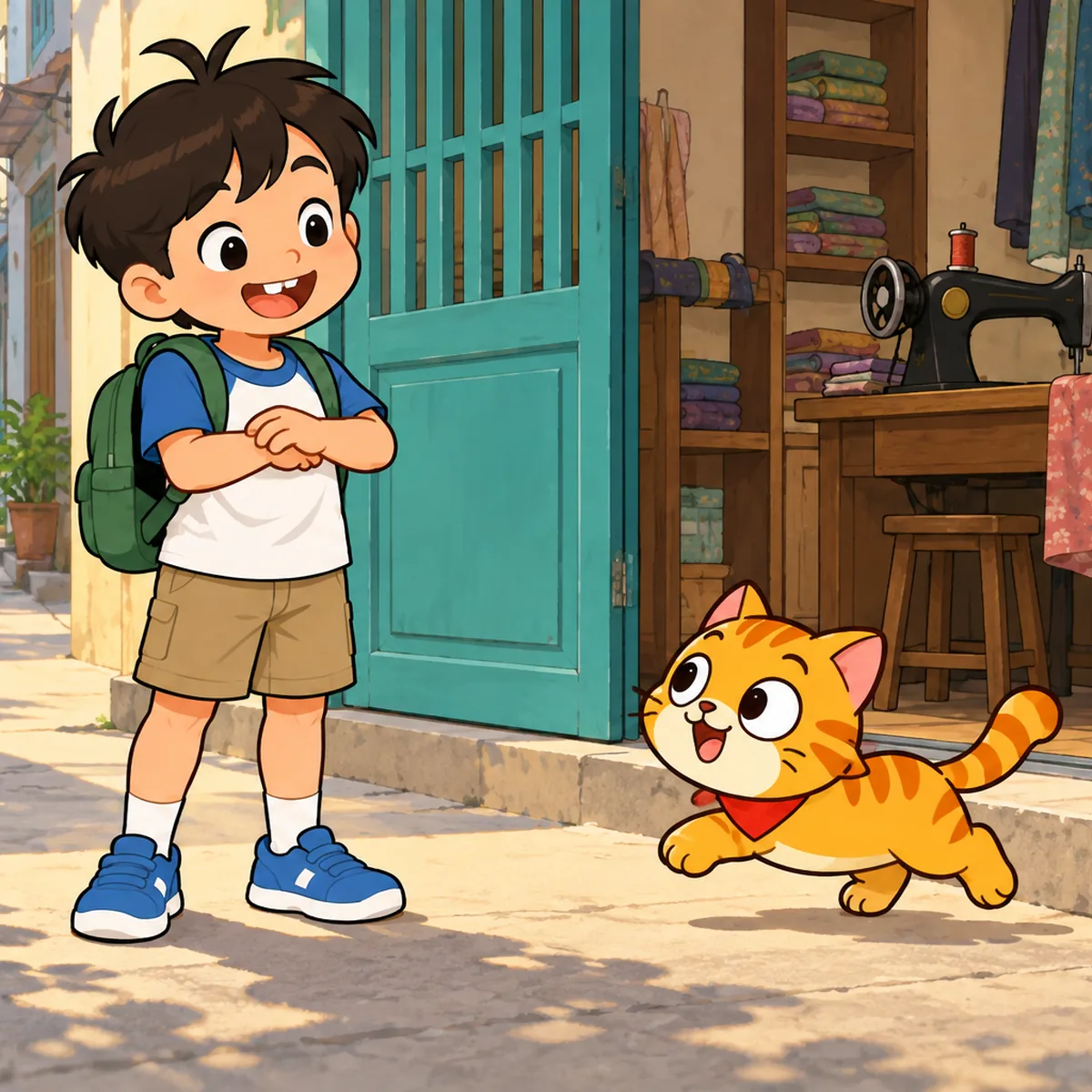
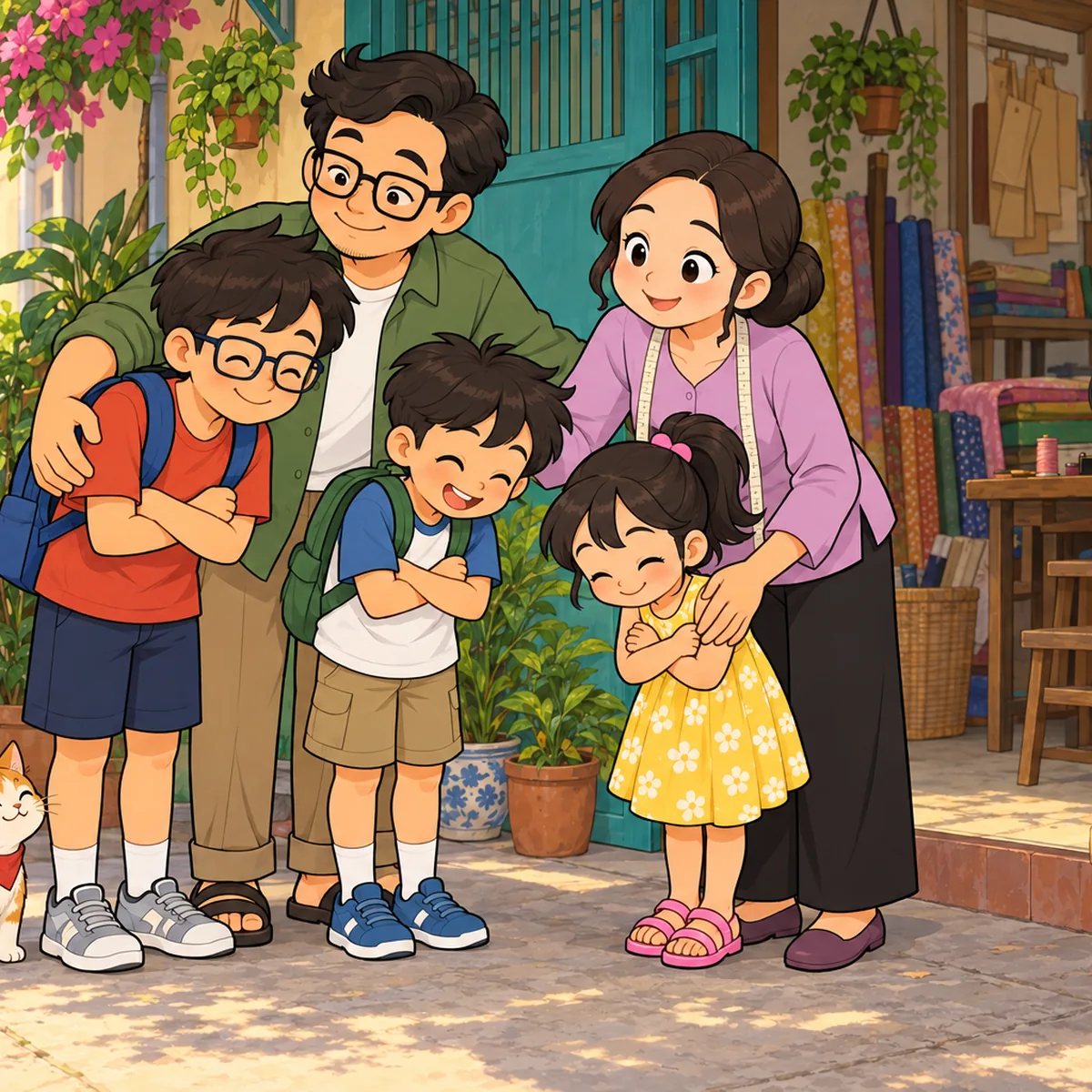
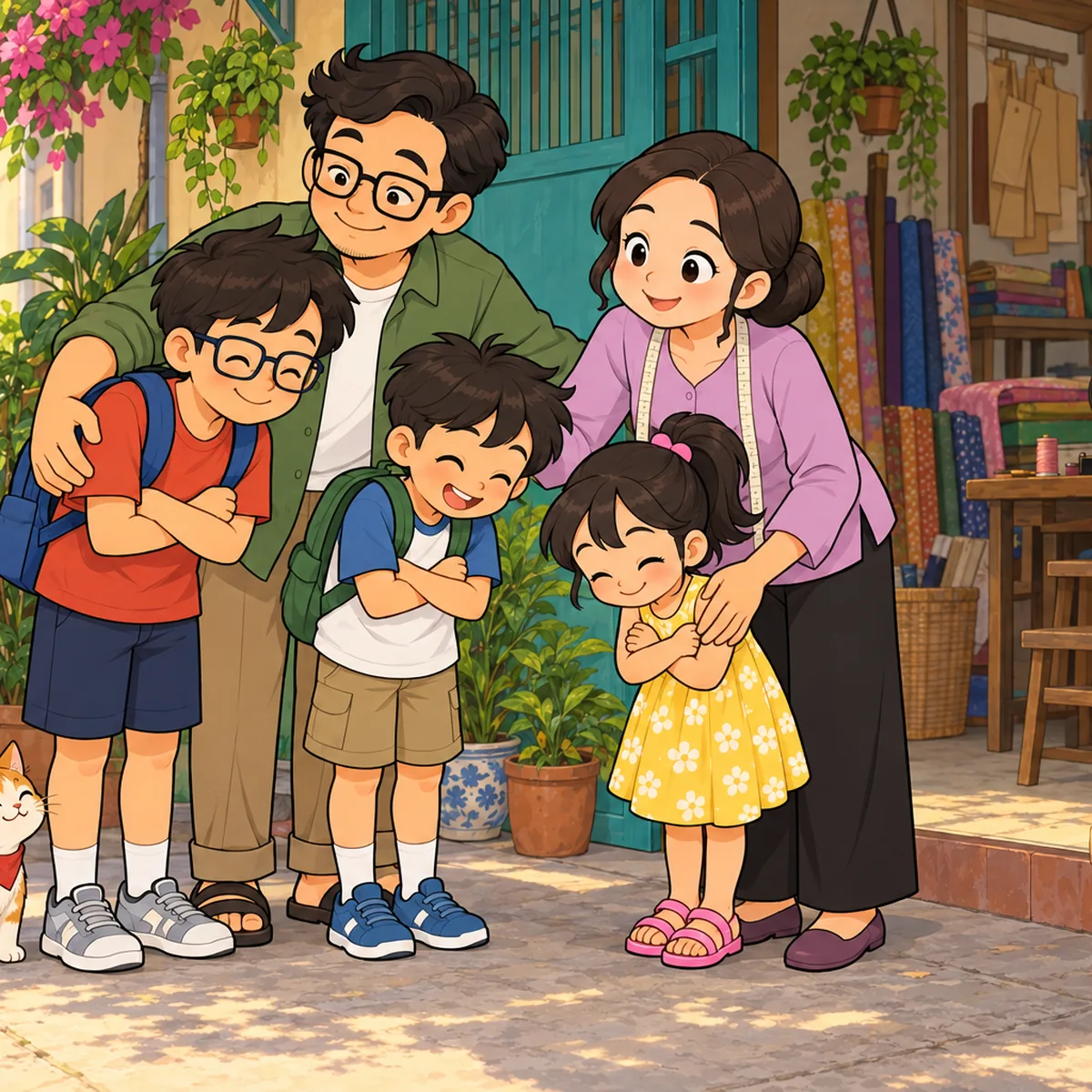
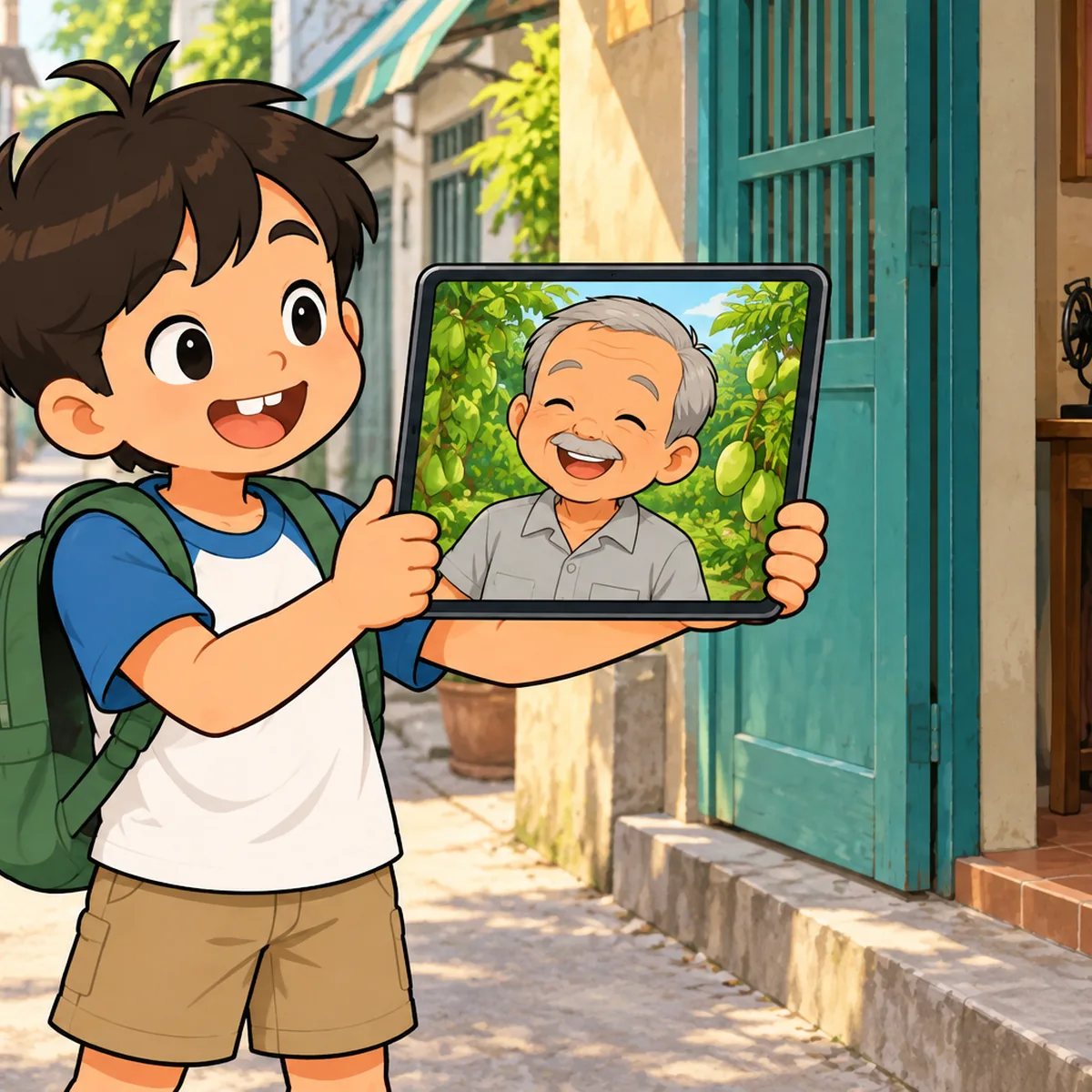
With our Tiếng Việt Của Con program, we separate the materials from the live instruction to give you the most flexibility. You can purchase the comprehensive digital textbook course for $19.99–$24.99, which includes beautiful illustrated books, interactive games, and animated videos featuring our recurring story family (Bi, Bo, Na, Ba, Má, and their kitten Cam). Then, you have the option to book live sessions with our teachers separately. This means you own the curriculum and can guide your child through it at home, while also having access to expert educators who specialize in getting kids to speak up.
Furthermore, we take online safety seriously. Our LingoRoom Kids Mode ensures a secure space with no session recording, only nicknames displayed, and a free parent link so you can quietly watch the lesson from your own device.
Try one Southern family phrase
You don't have to wait for a course to start teaching your child Vietnamese. You can begin today with one simple, high-impact routine: the call and answer.
In Southern Vietnamese culture, when an elder calls a child's name, the polite and immediate response is "Dạ!" (Yes/I hear you).
Here is how you can play this two-minute game at home:
- The Call: Call out your child's name with an affectionate tone. For example, "Bo ơi!" (Hey Bo!).
- The Answer: Teach your child to look at you and cheerfully reply, "Dạ!"
- The Reward: When they do it, smile and give them a high-five or a hug.
Practice this a few times when there is no pressure. Soon, you can start using it naturally around the house. If they forget and answer "Yes?" or "What?", gently remind them with a smile, "How do we answer in Vietnamese?"
This tiny interaction teaches them respect, introduces the Southern tone for Dạ, and gives them an immediate success. For mixed families where one parent does not speak Vietnamese, that parent can easily learn to play the "Má ơi!" (Mom!) or "Ba ơi!" (Dad!) game too, showing the child that Vietnamese is a family effort.
Are you ready to give your child the gift of family connection? Explore the Tiếng Việt Của Con series, and let's get started on this beautiful journey.
Book a free trial for my child
Frequently asked questions
What age should my child start?
We welcome beginners from age 3 up to age 11. Children ages 3–5 start at Bé 1 with fully oral play; ages 6–8 begin reading at Level 1, and ages 9–11 jump into our Fast Start course. Teenagers over 12 join our adult beginner classes.
Can a child start with no Vietnamese at home?
Absolutely. Whether your child understands a little but answers in English, or is starting completely from scratch, our program is designed to build their confidence step-by-step. Non-Vietnamese speaking parents can easily follow along and support the learning.
Is the textbook purchase a live lesson?
No, they are separate. You purchase the digital textbook course for $19.99–$24.99, which includes the illustrated stories, audio, and daily practice games. Live interactive lessons with our teachers are booked separately, giving you the choice of 1-on-1 or group classes.




0 Comments
Log in to leave a comment.