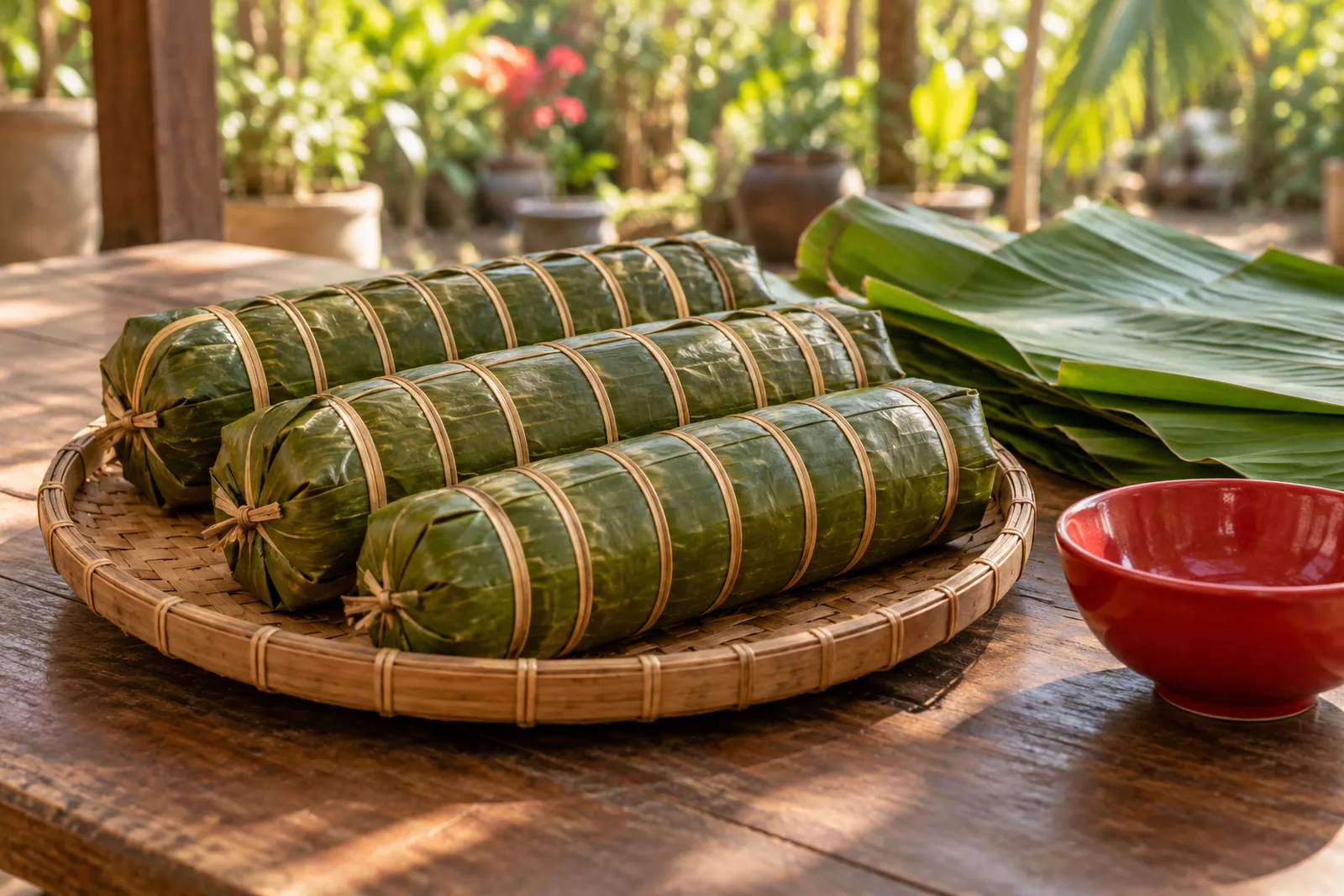
You’ve been invited to help with bánh tét, and the table is ready before you know where to sit. Start with “Cô ơi, để con phụ cô một tay nha.” — let me give you a hand. You don’t need to wrap a perfect cake. You need a small task, someone to show you, and the words to ask again.
What can you do if you are invited to help?
Offer help, ask for one manageable task, and follow the person organizing the preparation. Wrapping bánh tét together is a Southern Tết tradition. At the table, you have a reason to ask questions, listen, and try something with your hosts.
Tết Nguyên Đán 2027 begins on February 6. If you are arranging a preparation visit before then, confirm the family’s chosen day and time rather than assuming everyone wraps bánh tét on the same date. Let your hosts choose the day that suits their preparation.
You may know the food’s name but still feel unsure about joining the table. That is where a few short sentences help: ask what to do, request a demonstration, and check the filling. The aim is to participate comfortably in the work your hosts are actually doing.
Why is the wrapping table a good place to join in?
You can share a task while learning the words for it. Tuổi Trẻ has described Southern families preparing bánh tét together, with older relatives showing younger ones how to wrap it.
The practical opportunity for a learner is simple: you have something to point at and a task to ask about. You can listen for the answer, try the task, and ask again when needed. You do not need to take over an entire cake or pretend you already know the recipe.
SVFF’s general Southern Tết guide introduces the broader holiday vocabulary. Here, pull up a seat at the preparation table. For greeting lists, use the existing Tết wishes lesson; for child-focused activities, use Tết for kids. Choose whichever lesson will help with the visit you have planned.
What ingredients might you be working with?
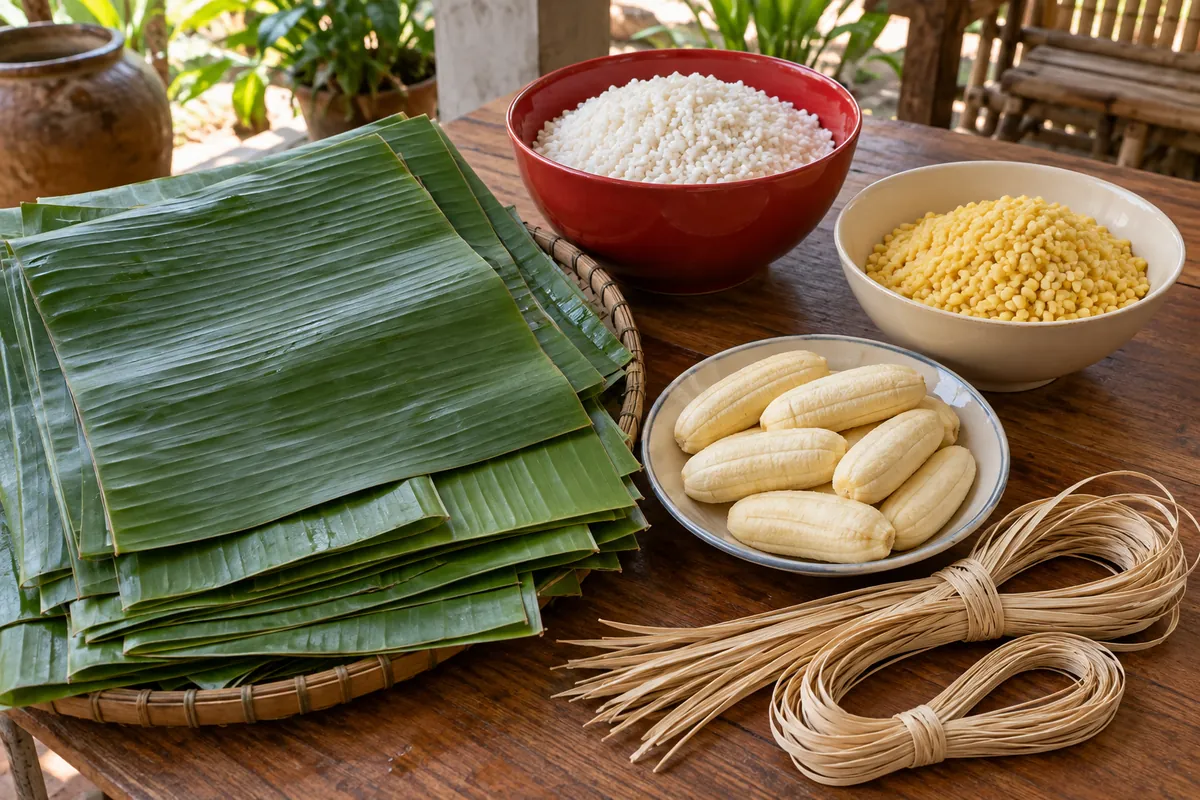
A traditional Saigon bánh tét can include sticky rice, mung beans, pork or pork fat, banana leaves, and ties. Fillings vary, so ask what is in the actual batch before helping or eating.
Tuổi Trẻ has also documented a family making bánh tét with banana filling. So when you see a new batch, ask which filling your hosts are making.
The phrase table includes a question about meat and a question about banana filling. Use the question you need, then listen for the answer. If an ingredient matters to what you can eat, ask your host to explain the full filling. A single label is not enough information to settle a dietary requirement.
For describing food more broadly, SVFF’s Saigon food vocabulary guide provides a useful next step. During this visit, focus on the ingredients in front of you rather than trying to name every holiday dish.
How do you offer help without getting in the way?
Ask for a task before picking up ingredients or moving someone’s arrangement. Our suggested starting point is a short offer followed by a request to be shown what to do.
The model phrases use “con” when addressing an older host as “cô.” That relationship may fit some family visits, but it is not automatic. Ask your partner or host which address terms they prefer. Vietnamese family and social address terms depend on the relationship; Your partner can help you settle the words before you arrive.
Once you have a task, keep it small. You might be shown how to arrange something or asked to pass an item. Watch the demonstration, repeat what you understood, and let the host correct you. If the pace is too fast, ask for another demonstration before trying to catch up by guessing.
What can you say when you need another demonstration?
Ask the person to show you again, then check your attempt. The table offers one line for each step, so you can use the same short exchange more than once.
Try rehearsing the situation beforehand with your partner. They demonstrate folding a sheet of paper; you ask to see it again, copy the fold, and ask whether your attempt is right. It gives you an easy way to rehearse asking and trying again. At the real table, follow the method your host shows you.
A useful goal is to understand one instruction and complete one task. If you lose track, stop and ask. You can also watch for a while before joining again. There is no need to turn the visit into a test of how long you can keep speaking Vietnamese.
How can you keep the conversation personal?
Ask about this family’s preparation rather than presenting a rule about all Southern households. Let your host decide how much detail they want to share while working.
You might start in English with a question about who usually helps or which filling they are making today. Then use the Vietnamese lines you have practiced when they fit. If a story goes beyond your listening level, ask your partner for a short explanation afterward rather than interrupting every sentence.
Keep any notes brief and check before taking photographs of people or sharing a family story. Remember the visit through one new word and one task you helped with.
How should you prepare before the visit?
Confirm the invitation, choose two lines to practice, and check the form of address. Leave recipe decisions and timing with the family preparing the food.
Read the meaning of each line before rehearsing it. Choose the offer of help and the request for another demonstration first; add a filling question if it is useful to you. Ask a Southern speaker to model them, then practice listening to a reply as well as speaking.
Afterward, write down one thing you understood and one question for your next Vietnamese lesson. Bring that question to your teacher so you can practice the reply before your next visit.
Which phrases can you practice?
Use the forms of address that fit your relationship.
| Vietnamese | Meaning / when to use |
|---|---|
| Cô ơi, để con phụ cô một tay nha. | Let me give you a hand. Offer help to an older female host when cô/con fits your relationship. |
| Con làm gì phụ được cô? | What can I do to help? Ask that host to give you a manageable task. |
| Cô chỉ con lại một lần nữa nha. | Could you show me one more time? Request another demonstration from the same host. |
| Con gói vậy được chưa cô? | Is the way I wrapped it okay? Check an attempt before continuing. |
| Bánh này có nhân thịt không cô? | Does this cake have meat filling? Ask about this batch; follow up about other ingredients if needed. |
| Đây là bánh tét nhân chuối hả cô? | Is this banana-filled bánh tét? Check which version you are looking at. |
Frequently asked questions
When is Tết Nguyên Đán in 2027?
Tết Nguyên Đán begins on February 6, 2027. Confirm a family’s preparation schedule separately.
Does all bánh tét have meat inside?
No. Banana-filled bánh tét is also documented. Ask about the full ingredients in the batch you are helping with or eating.
Should I start wrapping as soon as I arrive?
Ask for a task and a demonstration first. Follow your host’s method and check your attempt before continuing.
Should I call every older host cô and myself con?
No. The sample relationship may suit some visits, but address terms depend on the people involved. Ask your host or partner which terms to use.
Ready to practice?
Practice these exchanges with a 1-on-1 Vietnamese teacher: Book a free trial lesson.
Sources
- First day of Tết 2027 is February 6 → Tết calendar reference.
- Southern tradition of wrapping bánh tét together and showing younger family members how → Southern family bánh tét preparation.
- Saigon bánh tét ingredients: sticky rice, mung beans, pork or fat, banana leaves, ties → Saigon bánh tét ingredients.
- Banana-filled bánh tét documented in family preparation → 2026 family wrapping and banana filling.
- Relationship-dependent family address terms; conditional cô/con sample → Vietnamese pronouns reference.








0 Comments
Log in to leave a comment.