
Tiếng Việt Của Con — Southern Vietnamese for Kids by SVFF
It is a familiar scene in mixed and heritage households across the US, Canada, and Australia: a parent or grandparent speaks affectionately in Vietnamese, and the child confidently replies—in English. In a study of 69 Vietnamese-American children in California, researchers found that children's ability to understand Vietnamese (80% accuracy) was much stronger than their ability to speak it (36%). It is normal for understanding to come first. The key to bridging that gap isn't pressure or correction, but creating warm, everyday moments where answering in Southern Vietnamese feels natural and rewarding.
Why understanding can come before speaking
To understand why your child replies in English, we have to look at how the bilingual brain works. Listening and understanding require less cognitive effort than retrieving the right words, formatting the sentence, and pronouncing it correctly.
For your child, English is likely the language of their school, their friends, and their favorite shows. It is the path of least resistance. When you ask, "Con đói bụng hông?" (Are you hungry?), their brain instantly understands the meaning. However, answering "Dạ, con đói" (Yes, I am hungry) requires them to switch linguistic gears. Replying "Yes, I am!" in English is simply faster and easier for them.
It is crucial to recognize that their receptive language—their ability to understand you—is a massive accomplishment. They are not ignoring your Vietnamese; they are actively processing it. They have built a strong foundation, and that is half the battle won! The goal now is to gently bridge the gap between understanding and speaking without turning it into a chore or a stressful test. Forcing a child to speak can lead to anxiety and resistance, whereas creating a playful, natural environment encourages spontaneous speech.
Five low-pressure reply routines
The key to getting your child to speak is to remove the pressure. Instead of saying, "Say this in Vietnamese," you want to create natural opportunities where speaking Vietnamese feels easy, fun, and useful. Here are five routines you can weave into your daily life.
1. The choice question
Open-ended questions like "What do you want to eat?" can be overwhelming. Instead, offer a choice where the answer is built into the question.
- Example: "Con ăn táo hay chuối?" (Do you want an apple or a banana?)
- Gloss: táo (apple), chuối (banana), hay (or). If they point or answer in English, gently model the Vietnamese word: "À, con ăn chuối" (Ah, you want a banana). Give them a moment to repeat it, but if they don't, give them the banana anyway. You are planting seeds.
2. The fill-in-the-blank game
Music and predictable routines are magical for language learning. Sing a familiar Vietnamese children's song or say a daily phrase, and pause before the last word.
- Example: When turning off the lights at bedtime, say, "Chúc ba ngủ..." and let them fill in "ngon" (good night).
- Gloss: chúc ngủ ngon (good night). The predictability removes the cognitive load of forming a sentence, allowing them to focus on just one fun word.
3. The silly mistake
Children love correcting adults. It empowers them and makes language feel like a game rather than a lesson. Point to something obvious and say the wrong word in Southern Vietnamese.
- Example: Point to a picture of a dog and say, "Con mèo!" (Cat!).
- Gloss: con mèo (cat), con chó (dog). When they correct you, even if it is in English, you can say, "Oh! Không phải con mèo hả? Là con chó!" (Oh! Not a cat? It is a dog!).
5. Action and reaction
Play games like Simon Says (Ba nói...) where the action is the primary focus, and the language is just the vehicle. It keeps the energy high and the pressure low.
- Example: "Ba nói... vỗ tay!" (Dad says... clap hands!).
- Gloss: vỗ tay (clap hands).
A two-minute “Má ơi! — Dạ!” script
One of the most useful and culturally significant words in Southern Vietnamese is "Dạ." It is a polite response used when answering an elder. Teaching "Dạ" is often the very first step in moving from listening to speaking.
Here is a simple, two-minute script you can use at home. It is a game of hide-and-seek calling that you can play with a parent or caregiver. For mixed-language families, a non-Vietnamese parent can easily join in!
- Hide: Mom (Má) hides playfully behind a door or the sofa.
- Call: Dad (Ba) tells the child, "Gọi Má đi con!" (Call Mom!).
- The shout: The child yells, "Má ơi!" (Mom!).
- The answer: Mom pops out and answers brightly, "Dạ!"
- Role reversal: Now, Mom calls the child's name, "Bắp ơi!"
- The child's turn: Encourage the child to respond, "Dạ!"
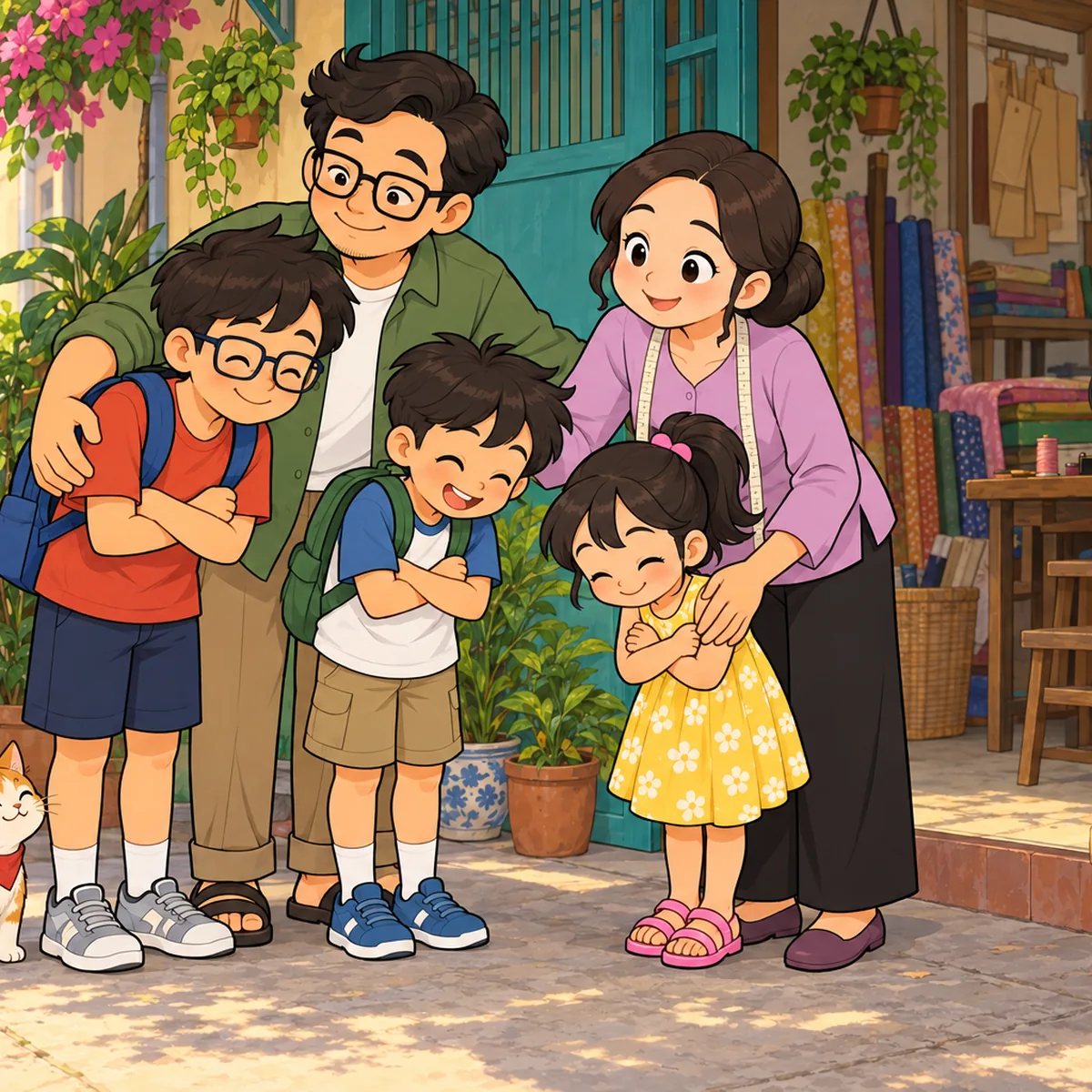
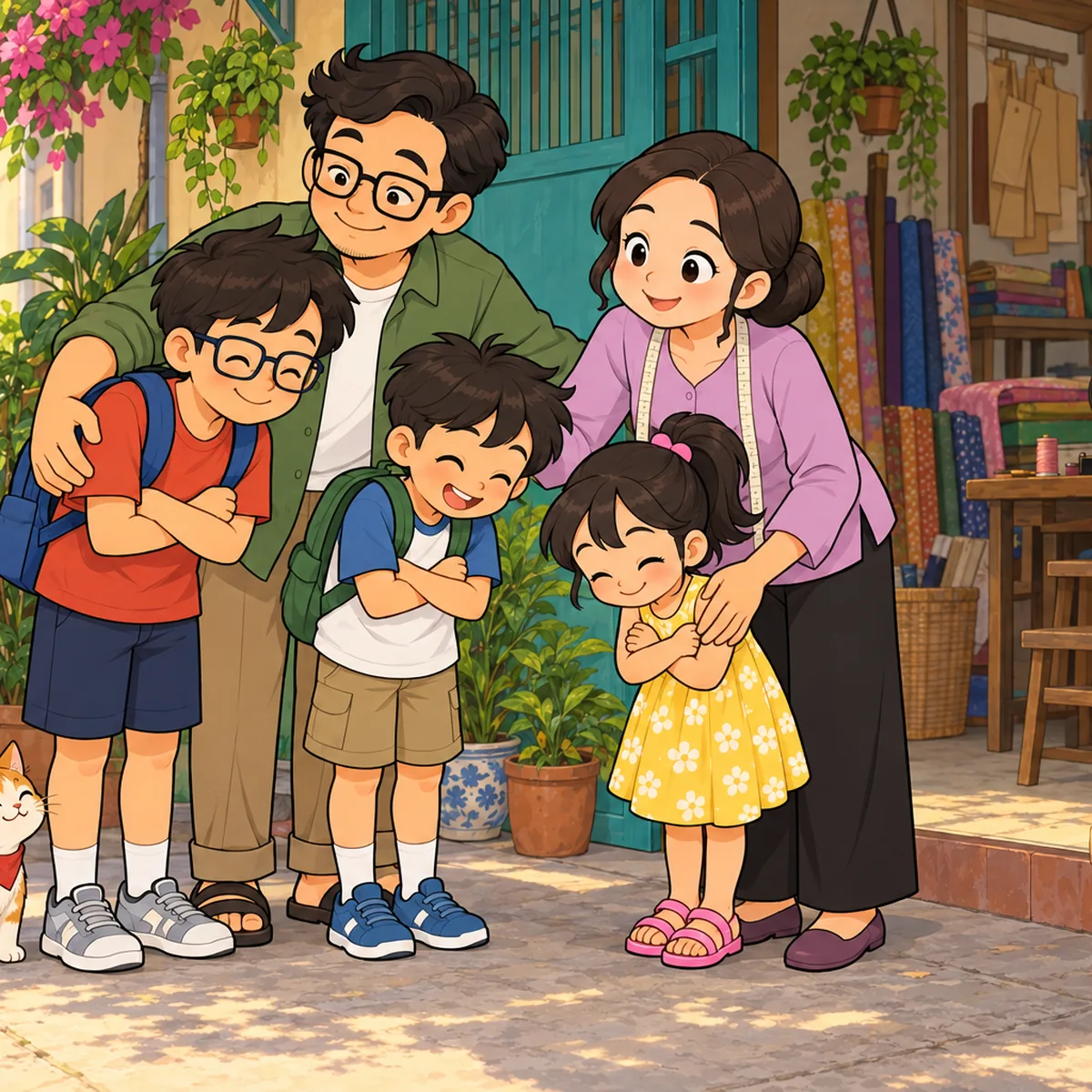
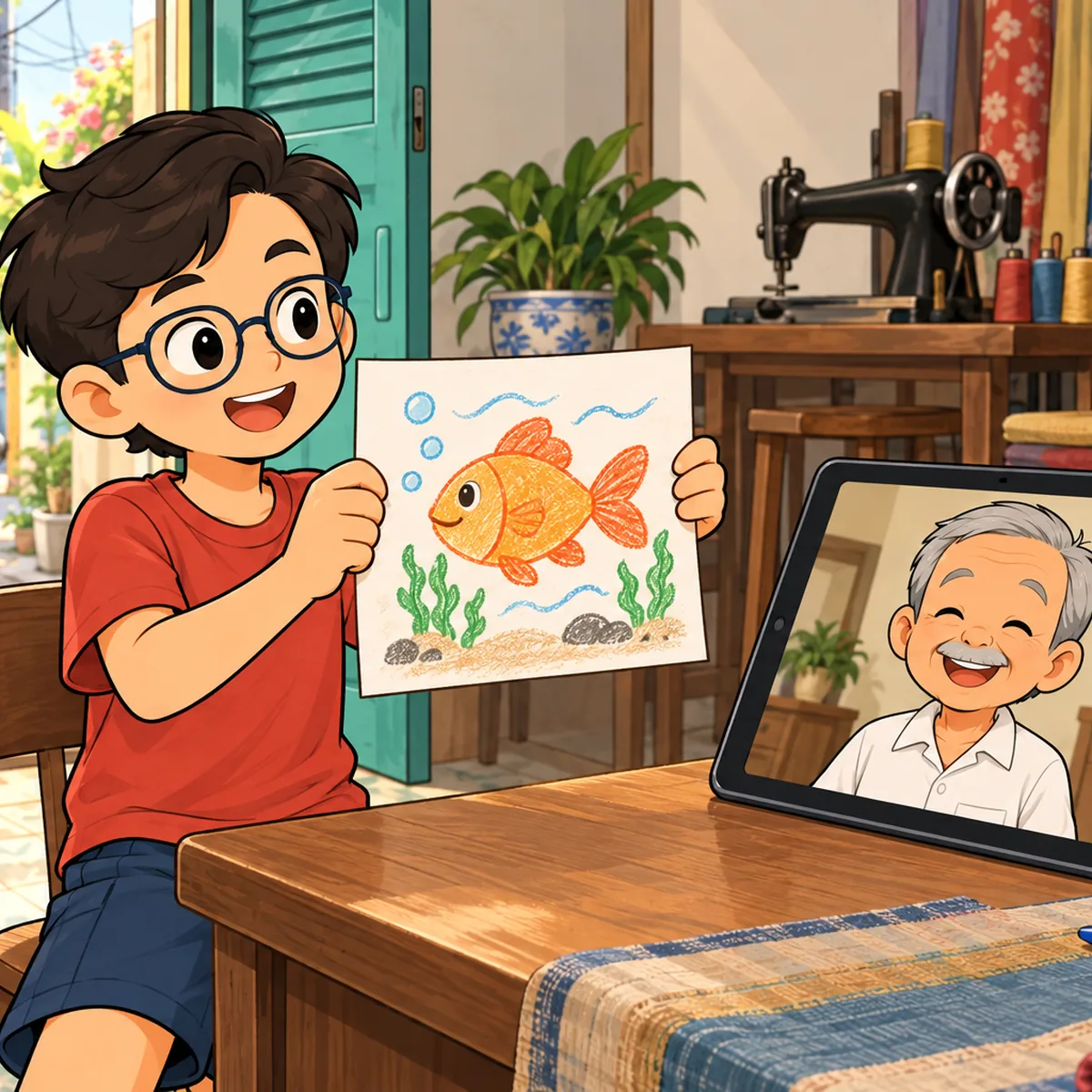
This simple game teaches the child that "Dạ" is a safe, easy, and fun way to connect. In our Tiếng Việt Của Con curriculum, we introduce this concept right in Unit 1, featuring our story family: Ba (Dad), Má (Mom), Ông ngoại (Grandpa), and Bà ngoại (Grandma). It is the perfect starting point before moving on to more complex vocabulary.
When to seek individual guidance
Practicing at home is wonderful, but sometimes a child needs a different environment to truly open up. If your child is used to speaking only English with you, they have built a habit. Breaking that habit can be easier with a new, friendly face in a structured setting.
This is where online lessons can make a massive difference. In a dedicated class, the expectation is naturally shifted. The teacher uses games, interactive stories, and positive reinforcement to create a space where speaking Vietnamese is the norm.
At Tiếng Việt Của Con · Southern Vietnamese for Kids, our classes are specifically designed for children in the US. We focus exclusively on the Southern Vietnamese accent, ensuring your child learns the exact words and tones they will hear from their grandparents.
Depending on your child's age, they might start in different levels:
- Bé 1 (Ages 3–5): A gentle, fully oral start with songs and movement. Perfect for toddlers who need a play-based approach. Find out more about our Bé 1 program.
- Level 1 (Ages 6–8): Building from first words to independent reading and speaking, tailored for early elementary children. Learn more about Level 1.
- Fast Start (Ages 9–11): An accelerated entry designed for older beginners who can progress more rapidly.
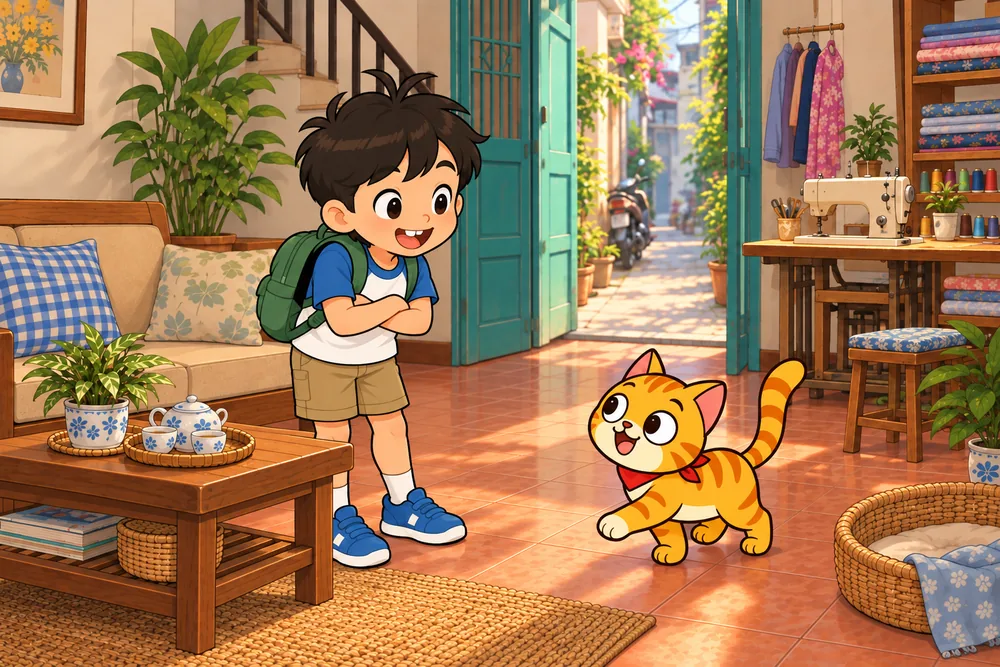
Our curriculum uses beautifully illustrated books, and learning happens alongside a relatable Vietnamese family and their playful kitten, Cam. The best part? You can Book a free trial for my child to see exactly how our teachers engage hesitant speakers.
Track small speaking wins
Language acquisition is not a straight line. There will be days when your child chatters away using the new words they learned, and weeks where they revert entirely to English. This is normal!
Keep a small journal or a note on your phone to track their speaking wins. Did they say "Ba" instead of "Dad" today? Write it down. Did they answer "Dạ" without being prompted? That is a huge victory!
When you track these small moments, you will realize just how much progress they are actually making. It will keep you motivated to continue those low-pressure routines. Remember, giving your child the gift of family connection takes time, patience, and a lot of love. They already understand you—the speaking will come.
Frequently asked questions
Should I pretend not to understand English?
No, pretending not to understand can frustrate your child and break the family connection. Instead, warmly acknowledge what they said in English, then naturally model the Southern Vietnamese reply for them to repeat.
How long until my child answers in Vietnamese?
Every child is different. Some start using short, polite words like 'Dạ' within a week of practice, while building full sentences can take months of consistent, low-pressure exposure. Celebrate the small wins, even if it is just a single word!
Can a non-Vietnamese parent help?
Absolutely. A non-Vietnamese parent can join in the daily games, use audio resources, and learn simple phrases alongside the child. When a child sees both parents participating, it shows them that learning Vietnamese is a fun, shared family activity.




0 Comments
Log in to leave a comment.