Tiếng Việt Của Con — Southern Vietnamese for Kids by SVFF
Raising bilingual children in an English-dominant environment requires a bit of strategy. In a study of 69 bilingual children in California, greater Vietnamese exposure accumulated from birth was directly associated with better vocabulary. You don't need to speak Vietnamese 100% of the time, but a structured, week-by-week home plan focused on short, daily Southern Vietnamese interactions can make all the difference.
Setting realistic bilingual goals
Set a goal you can observe in ordinary life, not a promise that the child will be ‘fully bilingual’ by a certain date. For the first month, perhaps the child greets Bà, answers one dinner question, and names two things in a story. Choose phrases that matter to your family and write down the starting point without judgment. English will remain strong in many English-dominant environments; making room for Vietnamese does not require treating English as the enemy.
The '15 minutes a day' rule

Try a fifteen-minute home block as a flexible routine, not a rule: a short story, a small speaking game, and one real use of the phrase afterward. Some days five attentive minutes will fit better. Put the routine next to an existing habit, such as after dinner or before a weekly call. Use the same few words for several days and change the game before the child gets bored. If the family misses a day, begin again without catching up through a long drill.
Incorporating live instruction
A live teacher can give the child a conversation partner beyond the family. Before a session, tell the teacher which relative the child wants to speak with and which phrases are already familiar. Afterward, ask the child to show one thing they practiced and use it once at home. The digital storybook course and live instruction are separate choices; confirm the current level, available units, and tuition before buying. A teacher helps most when home conversation gives the lesson a place to land.
Weekend family immersion
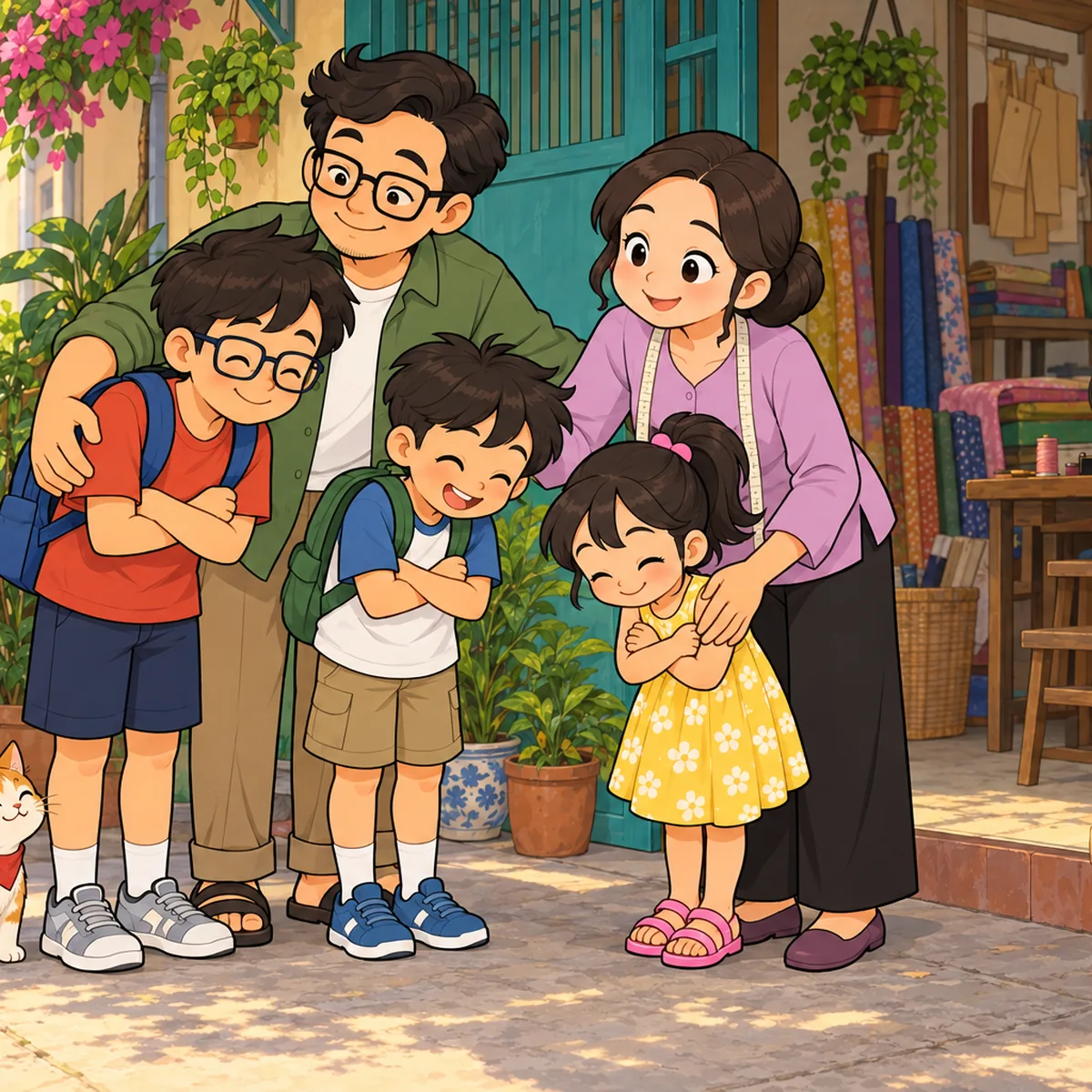
On the weekend, choose one family activity where Vietnamese has a real job: cooking a dish, visiting a relative, drawing a card, or telling a story. Invite a grandparent to lead a few minutes if they enjoy it. Give the child a small role—ask for an ingredient, greet the visitor, or choose a picture. It is fine if the whole afternoon is not in Vietnamese. A few genuine turns in a meaningful activity can be more comfortable than enforcing an all-day language rule.
Tracking long-term progress
Keep a simple note of what the child understands and says: ‘answered Dạ on Tuesday’, ‘recognized Má in the story’, or ‘asked Bà one question’. Review it monthly with the child and ask what they want to try next. Avoid comparing siblings or treating a quiet week as failure. Change the routine when it stops fitting your family. The plan works as a guide because you can adapt it to the child's age, interests, and the people they actually speak with.
Are you ready to support your child's journey? Explore our Tiếng Việt Của Con series today and give them the gift of the family language.
Book a free trial for my child
Frequently asked questions
Does a bilingual home need a strict language rule?
Set a goal you can observe in ordinary life, not a promise that the child will be ‘fully bilingual’ by a certain date. For the first month, perhaps the child greets Bà, answers one dinner question, and names two things in a story.
Is fifteen minutes of Vietnamese a day a guarantee?
Try a fifteen-minute home block as a flexible routine, not a rule: a short story, a small speaking game, and one real use of the phrase afterward. Some days five attentive minutes will fit better.






0 Comments
Log in to leave a comment.